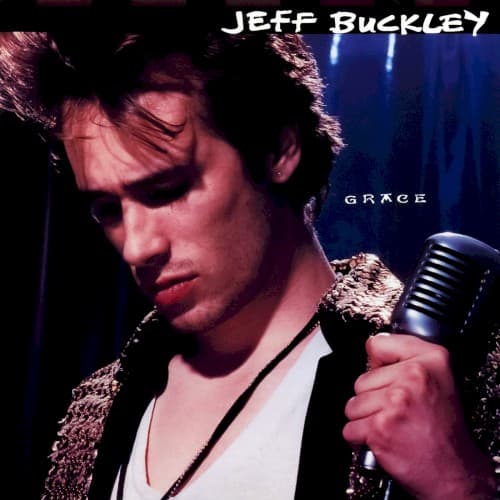
The composition gives the face almost everything. Buckley's head fills the frame, cropped close, so the first thing the eye meets is the lit cheekbone and the lowered lashes. From there it drifts down and right to the chrome microphone, then catches on the glint of sequins at the shoulder. That focal path, skin to metal to spangle, is the whole drama of the image in miniature.
The palette is bruised and warm at once: plum, shadow and skin tone, with the microphone standing as the one cool silver note against the purple-black ground. Light rakes across one side of the face and leaves the other in soft dark, which keeps the closed eyes readable as calm rather than sleep. Nothing in the frame competes for attention with that expression.
The clothing is where the picture starts to argue with itself. The jacket glitters with sequins along the shoulder and lapel, worn open over a plain white V-neck undershirt. It reads as glamorous and thrown-together in the same glance, theatrical and casual, dressed up and dressed down. The sequins want the spotlight; the closed eyes withdraw from it. That tension is the meaning of the cover: a performer's costume worn by someone in a moment of pure, unperformed attention.
The typography is kept restrained so the face can dominate. His name runs across the top in bold white capitals, JEFF BUCKLEY, an assertive banner. The album title sits small and quiet to the right, GRACE, the A marked with a delicate accent stroke, almost a whisper beside the name. The design lets the image breathe, framing rather than crowding it.
Read as a whole, the picture works because it refuses the obvious. A debut cover would normally sell the artist's charisma outward; this one turns the charisma inward, glamour and silence held in the same frame. The idle microphone tells you the sound is happening somewhere he can hear it but you cannot, and the sequins tell you he was born to stand in front of one anyway. It is a portrait of listening dressed as a portrait of stardom.