The Most Influential Album Covers of All Time
The handful of sleeves that didn't just package a record but changed what every record after them could look like.
By Brett Cassidy3 min readUpdated
Influence is harder to measure than fame. A cover can be famous because the album sold millions; it becomes influential when it changes the visual language other designers reach for afterward. The fifteen sleeves below did the second thing — each introduced an idea, a technique, or a kind of nerve that the rest of the industry then borrowed for decades.
They're listed in chronological order, not ranked — the point is the through-line, from the invention of the designed jazz sleeve to the hip-hop cover as autobiography. Every one has a full story in the archive; follow the links to read how each was made.

01
Blue Train
John Coltrane · 1958
Reid Miles's Blue Note design — a duotone photograph, bold cropped type, generous space — became the house style of modern jazz and a permanent reference point for how confident graphic design looks on a record.
Read the full story →Find on vinyl →
02
The Velvet Underground & Nico
The Velvet Underground · 1967
Andy Warhol's peelable banana turned the sleeve into a Pop Art object you were invited to touch. It made the cover a concept rather than a portrait, and put the designer's name on equal footing with the band's.
Read the full story →Find on vinyl →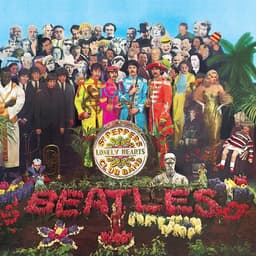
03
Sgt. Pepper's Lonely Hearts Club Band
The Beatles · 1967
Peter Blake and Jann Haworth's crowd of life-size cutouts reframed the cover as a designed event — a tableau to be decoded. It licensed the idea that a sleeve could be as ambitious, and as discussed, as the music inside.
Read the full story →Find on vinyl →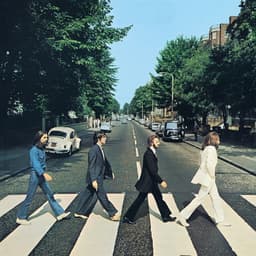
04
Abbey Road
The Beatles · 1969
No band name, no title — just four men on a crossing. The confidence of a pure, unlabelled image made it one of the most imitated photographs in the world and proved a cover could sell itself on recognition alone.
Read the full story →Find on vinyl →
05
In the Court of the Crimson King
King Crimson · 1969
Barry Godber's screaming face turned prog's inner world outward in a single terrified image. It showed a cover could be pure psychological interior, and launched a lineage of fantastical, illustrated sleeves.
Read the full story →Find on vinyl →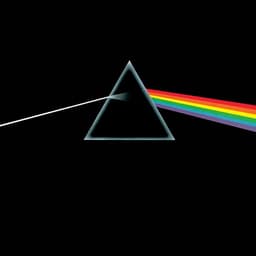
06
The Dark Side of the Moon
Pink Floyd · 1973
Hipgnosis reduced an entire album to one graphic symbol — a prism splitting light — with no band name and no title. It proved a cover could work like a logo, and became one of the most reproduced images of the twentieth century.
Read the full story →Find on vinyl →
07
Horses
Patti Smith · 1975
Robert Mapplethorpe's stark, androgynous portrait of Patti Smith made a photograph do a thesis's worth of work. It set the template for the cover that fixes a mood — and a person — in one unadorned frame.
Read the full story →Find on vinyl →
08
Never Mind the Bollocks, Here's the Sex Pistols
Sex Pistols · 1977
Jamie Reid's ransom-note lettering and clashing pink-and-yellow made design itself an act of aggression. It handed a generation a DIY visual language that punk — and everything downstream — ran with.
Read the full story →Find on vinyl →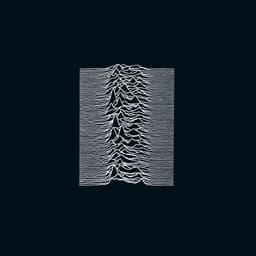
09
Unknown Pleasures
Joy Division · 1979
Peter Saville's black-on-black pulsar plot, lifted from an astronomy textbook, is arguably the most copied image in music. Its austere, text-free minimalism rewired what 'serious' could look like on a sleeve.
Read the full story →Find on vinyl →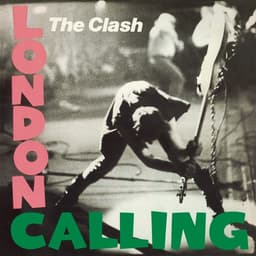
10
London Calling
The Clash · 1979
Ray Lowry wrapped Pennie Smith's bass-smash photo in typography copied straight from Elvis's debut — pastiche as statement. It taught designers that quoting the past could be the sharpest way to comment on the present.
Read the full story →Find on vinyl →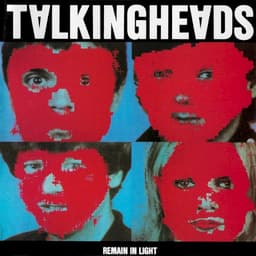
11
Remain in Light
Talking Heads · 1980
The band's computer-masked portraits were among the first covers built with digital image manipulation, prefiguring decades of processed, uncanny sleeve photography long before the tools were common.
Read the full story →Find on vinyl →
12
Power, Corruption & Lies
New Order · 1983
Peter Saville put a Fantin-Latour flower painting on the front, a colour-code alphabet on the back, and the band's name nowhere. It argued the record sleeve could be high art and demand real work from the viewer.
Read the full story →Find on vinyl →
13
Loveless
My Bloody Valentine · 1991
Kevin Shields's pink motion-blur guitar is the sound made visible. It became the visual shorthand for shoegaze and dream-pop, copied by a generation of bands reaching for the same woozy, dissolving haze.
Read the full story →Find on vinyl →- Sensitive
view on page14
Nevermind
Nirvana · 1991
A single provocative photograph — a baby chasing a dollar underwater — did all the work. It showed that one uncomfortable, legible image could define a record, and an era, more powerfully than any band portrait.
Read the full story →Find on vinyl → 
15
Illmatic
Nas · 1994
Compositing a childhood photo of Nas over the Queensbridge projects fused portrait and place into one origin story. It became the template for the hip-hop cover as autobiography, rooted in a specific block.
Read the full story →Find on vinyl →
Keep exploring
Sources & further reading
- 100 Best Album Covers — Rolling Stone
- The Album Cover Art collections — Storm Thorgerson & Aubrey Powell
- Permanent collection notes on album art — Victoria and Albert Museum
Read more about how we research and source these guides.