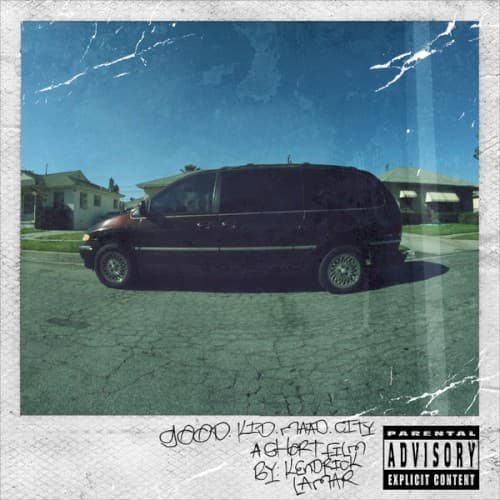




In an image that crystallizes automotive heritage and personal mythology, Kendrick Lamar stands beside his 1987 Buick Grand National Experimental on the cover of GNX. The black-and-white photograph captures both man and machine in stark simplicity, embodying the album's themes of legacy, authenticity, and West Coast dominance.
The cover concept originated from Lamar's deeply personal connection to the GNX vehicle. In a 2012 interview with Complex, he revealed that his parents brought him home from the hospital in 1987 in a Buick Regal—the same year and base model that spawned the legendary GNX. After purchasing his own vintage GNX in March 2024, Lamar described it as a full-circle moment arriving at the peak of his career.
Photographer Dave Free, Lamar's longtime creative partner and pgLang co-founder, captured the cover image with precision and restraint. The composition strips away excess, focusing entirely on the essential elements: artist and automobile. Free, who has directed numerous Lamar music videos under their collective name The Little Homies, brings his signature minimalist aesthetic to this portrait.
Lighting Director Eduardo Silva crafted the dramatic illumination that defines the image's mood. The stark lighting creates sharp contrasts, emphasizing both the car's menacing silhouette and Lamar's commanding presence. The lighting design transforms what could have been a simple portrait into a statement of power and legacy.
pgLang, the creative communications company co-founded by Lamar and Free in 2020, provided overall creative direction for the project. The company's mission to break conventional formats while maintaining authenticity is reflected in the cover's bold simplicity. This marked pgLang's first major album cover as creative directors since becoming Lamar's primary label.
The album arrived as a complete surprise on November 22, 2024, with the cover image posted across Lamar's social media accounts alongside a brief teaser. The unexpected release strategy, typical of Lamar's approach, sent shockwaves through the music industry and sparked immediate conversations about the visual's symbolism.
The minimalist composition deliberately avoids traditional rap album aesthetics. No flashy graphics, no elaborate typography treatment—just the raw power of black-and-white photography. The decision to keep the album title off the cover entirely follows Lamar's pattern from Mr. Morale & the Big Steppers, emphasizing image over text.
The 1987 Buick GNX holds deep cultural significance beyond Lamar's personal connection. Only 547 were ever manufactured, each costing $29,900 new. The all-black exterior earned it the nickname "Darth Vader," while its ability to outperform Corvettes and Ferraris made it a legend of American automotive engineering.
Critics immediately recognized the cover's visual impact and symbolic weight. The image perfectly encapsulates the album's themes of West Coast pride, personal legacy, and the journey from Compton to global cultural dominance. The GNX represents not just performance and style, but authenticity in an era of manufactured personas.
The cover's influence extends beyond hip-hop into automotive culture, with pristine GNX examples potentially increasing in value following Lamar's cultural spotlight on the vehicle. The image has inspired countless tributes and parodies across social media, cementing its place in the visual lexicon of 2024.
Free's photographic approach on GNX demonstrates the power of restraint in an oversaturated visual culture. By stripping away distractions and focusing on essential elements, the cover achieves maximum impact through minimum elements—a masterclass in visual storytelling that honors both automotive heritage and artistic legacy.
Get notified when we publish new cover stories. Download the Behind the Covers app and turn on notifications — a new album art deep dive, every day.
Loved the story behind GNX? Hear the album or add it to your collection.
More by Kendrick Lamar
More Hip-Hop Covers
More from the 2020s

Up next
Debí Tirar Más Fotos
Bad Bunny · 2025
Two white plastic chairs sit against a plantain tree backdrop in this deceptively simple cover that celebrates Puerto Rican identity. The ordinary objects transform into symbols of community, memory, and cultural resistance through Bad Bunny's artistic vision.
Read this story →Want to explore more?
Never miss a new cover story
Get the Behind the Covers app and turn on notifications — we publish new album art deep dives every day.