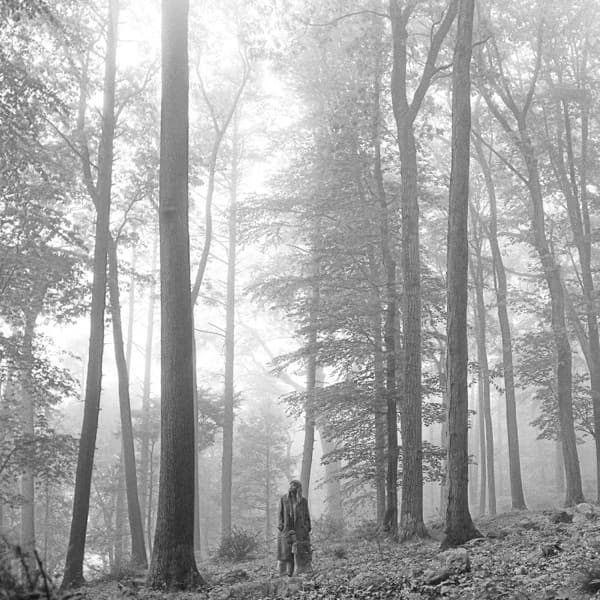




Find her. The first time you look at the cover of folklore, you might not. Towering trunks rise like cathedral columns through a haze of morning fog, the whole frame washed in soft silver black-and-white. Only after the eye settles do you spot the small figure near the bottom center, a woman in a long double-breasted plaid coat over a pale prairie dress, hands tucked in her pockets, head tipped up toward the unseen canopy. She is the smallest thing in the picture, and that is exactly the point.
This was the summer of 2020, and Taylor Swift had no plan to make this. The album was conceived in quarantine during the COVID-19 pandemic and arrived as a surprise on July 24, with almost no warning, slipping out through Republic Records into a world that had stopped moving. With a technical team out of the question, she built the entire look herself: styling her own hair, makeup, and wardrobe, dreaming up a mood and handing it off to a single collaborator.
That collaborator was photographer Beth Garrabrant, who got a phone call at her studio in Austin and, one week later, was standing in the woods with Swift. There was no glam squad, no lighting rig, no caravan of assistants. Swift said she simply called a friend whose house backed onto these trees, ordered nightgowns online, and did her own face for the shoot. The result is a portrait that feels less like a pop campaign and more like a found photograph from another century.
The references were deliberate. The two looked at Surrealist work and imagery that played with human scale in nature, at early autochromes and ambrotypes, and at photo storybooks from the 1940s. You can read all of it in the frame: the way the human figure is dwarfed by the forest, the dreamlike compression of fog, the antique stillness. Swift wanted it all in black-and-white and was insistent on shooting on film, which suits Garrabrant, who works primarily in medium format. The grain and the soft tonal gradations here are the fingerprint of real celluloid, not a filter.
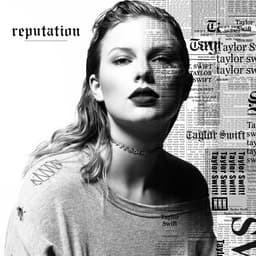
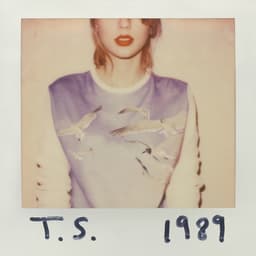
Look closer at the staging. She stands as a 19th-century pioneer figure, alone, dressed for a colder world than ours, surrounded by underbrush and a scatter of fallen leaves across the forest floor. The light pours in from the upper left, blowing out the distance to near white so the farthest trees dissolve into nothing. The nearer trunks, especially the massive one anchoring the left of the frame, hold their bark texture in sharp contrast. The composition lets you wander the picture before it lets you find the person, an unusual choice for an artist whose previous covers put her face front and center.
There is no title on the front, no name, no logo. The cover trusts the image to do everything. That restraint matches the music critics filed under folk, indie folk, and alternative rock, a quiet pivot from the stadium pop she was known for. The whole package, the art, the lyric videos, the design, was built through the same DIY approach, made under constraint and embracing it.
That is the real story buried in the fog. A global lockdown took away the machinery that usually surrounds a record this size, and what replaced it was a friend's woods, a borrowed clearing, online-ordered nightgowns, and one photographer with a film camera. The cover of folklore turns scarcity into atmosphere. The figure is small, but the world she stands in is vast and hushed and alive, and you keep returning to the trees, and to her, trying to decide whether she is lost or finally exactly where she wants to be.