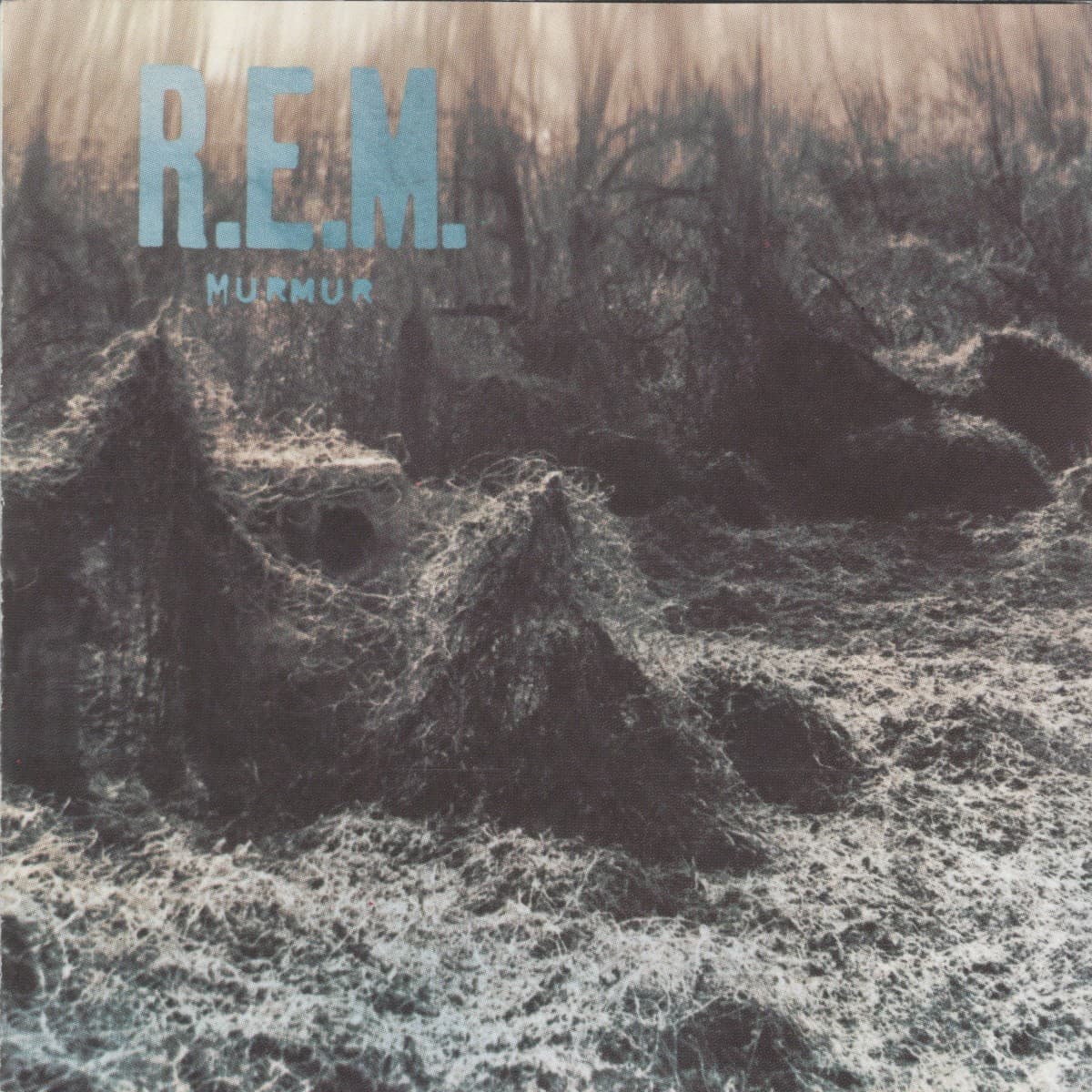


Before R.E.M. became one of America's biggest bands, Murmur made them look as though they had emerged from something overgrown and difficult to see through. The front cover is dominated by kudzu, the fast-growing vine that had become a familiar part of the Southern landscape. There is no band portrait, no stage and no obvious narrative. The listener meets a living wall.
The original credits matter because the sleeve was collaborative. R.E.M.'s official archive lists Ann Kinney, Carl Grasso and Sandra Lee Phipps under cover collaboration, with Phipps specifically credited for R.E.M. and trestle photographs. Phipps's own archive also preserves her 1982 portrait sessions made for the Murmur album art. That makes her role unusually well documented without requiring the story to flatten the entire package into one generic design credit.
Kudzu works on the cover as texture, atmosphere and obstruction at once. Leaves overlap vines; vines obscure whatever structure sits behind them. The image offers almost none of the information expected from a debut album. It does not tell the viewer what the band members look like or what scene they belong to. Instead it creates a place that feels specific and half hidden.
The back cover deepens that geography with the old railroad trestle in Athens, Georgia. The structure became so strongly associated with the record that it is now widely known as the Murmur Trestle. Explore Georgia identifies it as the remnants of a railroad that linked Athens and Augusta and dates the structure to the nineteenth century. What had been ordinary infrastructure acquired a second cultural identity through the album package.
That front-and-back pairing is what makes Murmur more interesting than a single famous photograph. The sleeve builds a visual Athens without printing the city's name as a slogan. Kudzu supplies the overgrowth; the trestle supplies the human trace underneath it. One image is almost abstract, the other architectural, but together they place R.E.M. inside a recognizable regional environment.
The visual strategy also parallels the record's refusal to explain itself too quickly. Michael Stipe's vocals were famously difficult to parse, and the music often blurred jangling guitars, rhythm and voice into a texture whose meaning emerged gradually. The cover behaves similarly. The subject is ordinary vegetation, but the crop and density make it hard to resolve immediately.
Murmur was released on April 12, 1983 by I.R.S. Records after R.E.M. had developed within Athens' independent music scene. Its production by Mitch Easter and Don Dixon helped give the record a sound that was melodic but difficult to reduce to the dominant rock styles around it. The sleeve avoids those visual conventions too. It is regional without being nostalgic, mysterious without relying on fantasy, and distinctive without needing a logo-heavy identity system.
Four decades later, the cover still works because its mystery comes from something real. The kudzu is not an invented gothic prop, and the trestle is not a studio set. They are pieces of Georgia landscape that the package reframed. Murmur turned them into part of R.E.M.'s origin story, and in the case of the trestle, the album eventually changed how the place itself was named and remembered.