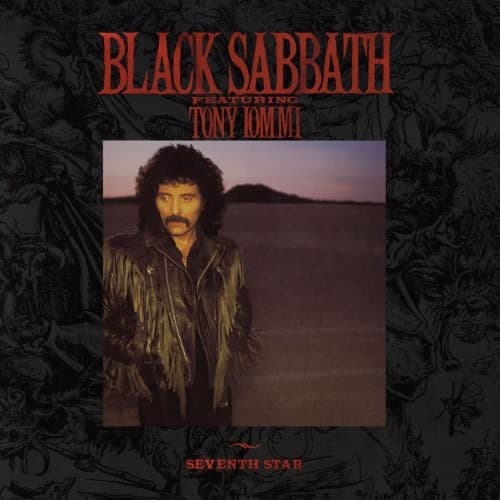



Seventh Star is one of the rare album covers whose identity problem is visible before you hear a note. Tony Iommi stands by himself in a barren landscape, isolated against rock, sand and a heavy sky. The image does not present a functioning band. It presents one man. That is unusually appropriate for a record that began as Iommi's first solo album and was ultimately released, under record-company pressure, as Black Sabbath featuring Tony Iommi.
The original 1986 package credits Steve J. Gerdes with art direction and design and Kevin Stapleton with photography. That distinction matters. The front cover's force comes from Stapleton's portrait of Iommi and Gerdes's decision to make the guitarist the visual center of the release. The composition is sparse enough that the landscape starts to feel symbolic, but the safest reading begins with what the sleeve actually documents: Iommi alone, on an album whose final branding placed the Black Sabbath name above a project built around him.
The wider package adds a much older image. Black Sabbath histories have long noted the use of Lucas Cranach the Elder's The Temptation of St Antony on the back-cover artwork. The British Museum identifies Cranach's work as a 1506 woodcut showing Saint Anthony lifted into the air and attacked by demons. That museum record is useful because some later Sabbath descriptions call the image a copper-plate engraving. It is not: the surviving institutional catalog identifies the technique as woodcut.
That Saint Anthony image makes an intriguing companion to the photograph of Iommi, but it should not be oversold as a proven autobiographical code unless a primary design source surfaces. The visual parallel is nevertheless strong. Cranach's Anthony is a solitary religious figure under assault; Iommi is photographed alone in an inhospitable landscape on a record that was pulled between a solo identity and the commercial weight of the Black Sabbath name. The package lets those two images sit beside each other without needing a literal one-to-one explanation.
The desert setting also connects naturally to the album's Egyptian and mystical imagery. 'Sphinx (The Guardian)' leads directly into the title track, whose lyrics evoke sand, pyramids, judgment and the rising seventh star. The official Black Sabbath audio metadata and current release records date the album to January 28, 1986, while archival discography material records the project as having been intended for Iommi alone before the Black Sabbath name was attached. The cover therefore sits at the intersection of the record's lyrical landscape and its unusual authorship history.
The typography reinforces that tension. The sleeve does not simply say Tony Iommi; it announces Black Sabbath and then qualifies the identity with 'featuring Tony Iommi.' That wording is not incidental packaging. It is evidence of the compromise that defined the release. The image underneath does something subtler: it gives the visual field almost entirely to Iommi anyway.
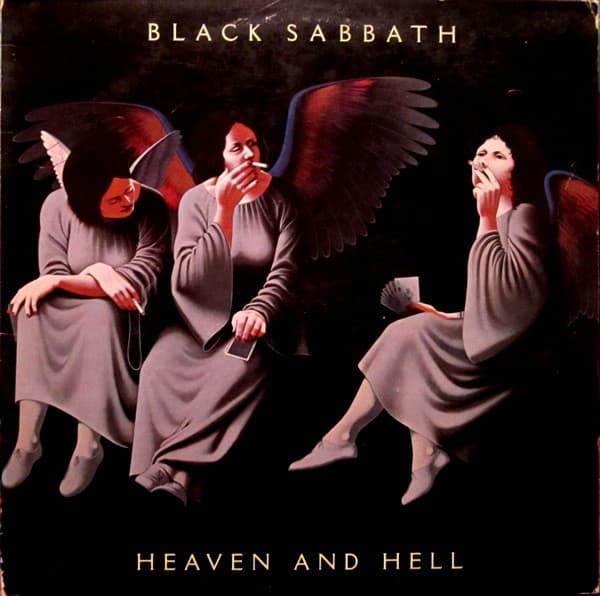
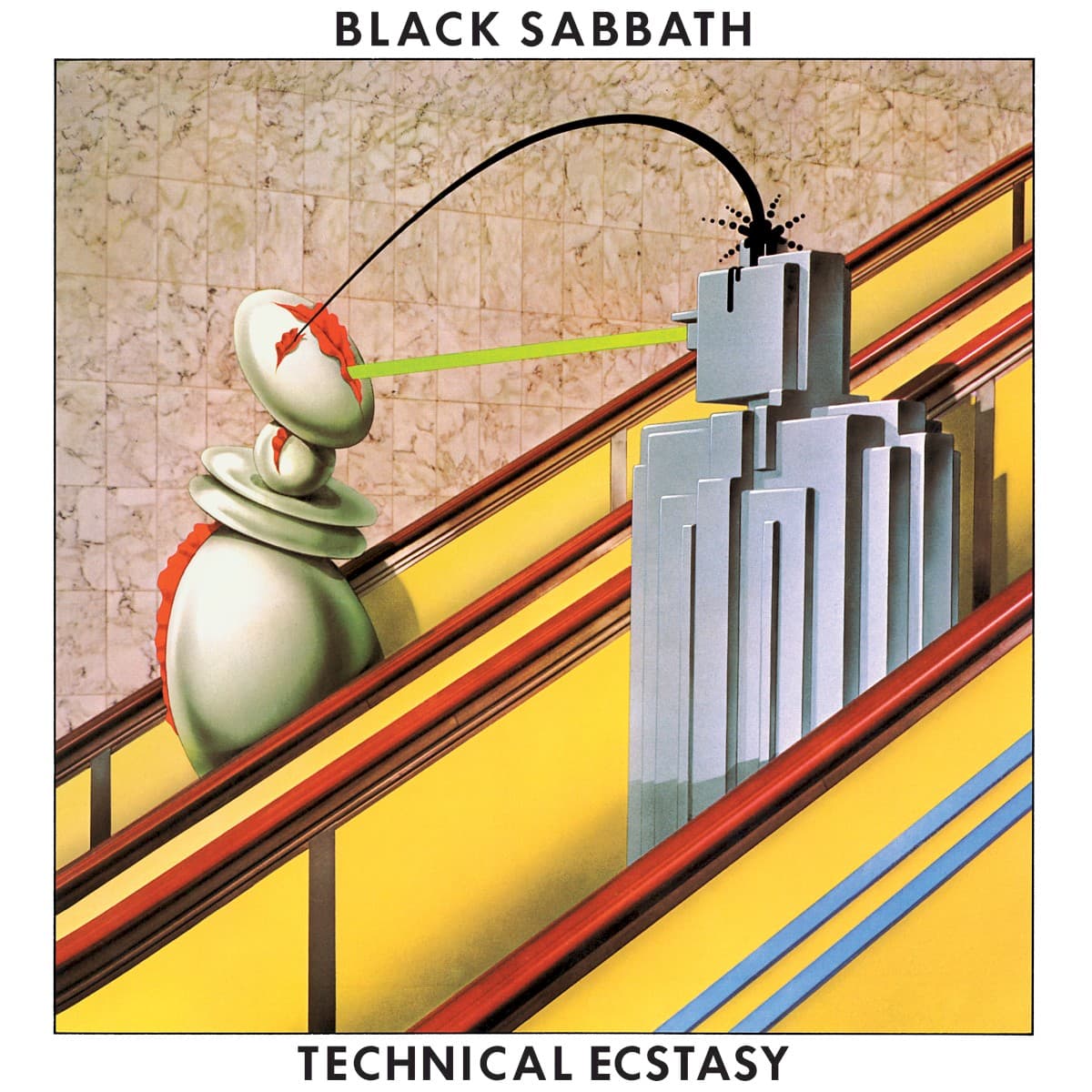
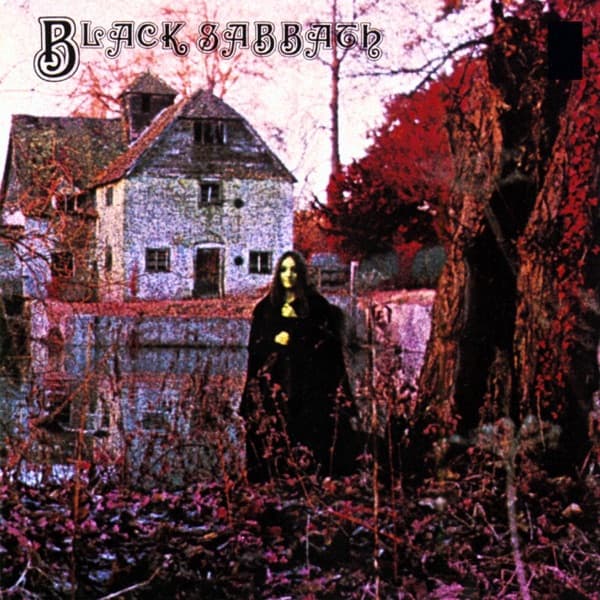
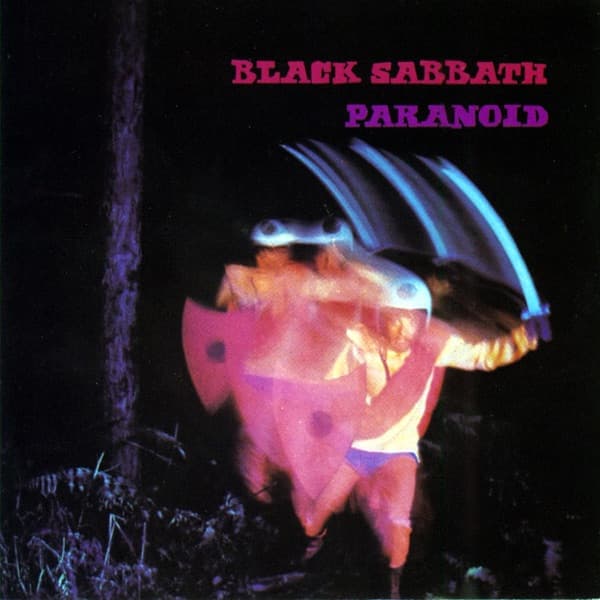
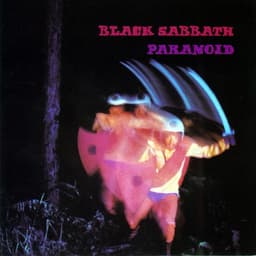
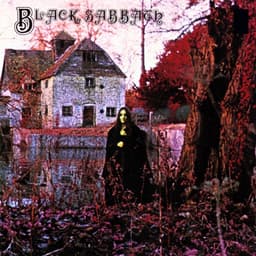
There is another reason the cover stands apart in the Sabbath catalog. Earlier sleeves often created distance between the band and the image: anonymous figures, staged occult scenes, illustrations or conceptual graphics carried the mythology. Seventh Star is much more direct. The central figure is the guitarist himself, recognizable and exposed. Even with the mystical scenery around him, the sleeve functions as portraiture.
Forty years later, that directness is the cover's biggest strength. It captures a transitional Black Sabbath without pretending the lineup was stable or the project had a simple identity. The landscape, the Renaissance image and the peculiar 'featuring Tony Iommi' billing all point toward the same idea: Seventh Star is a record about one musician standing inside a much larger name.