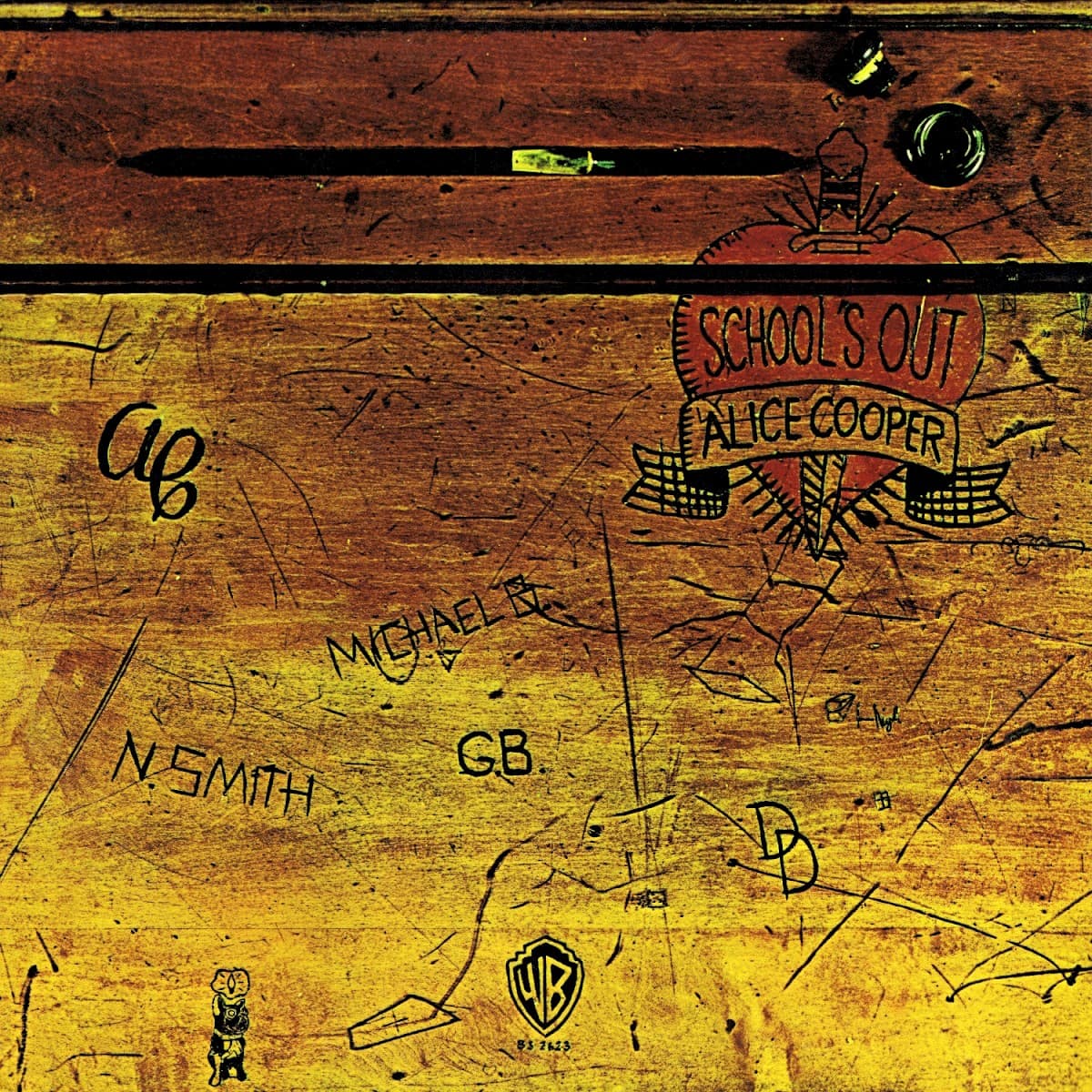

For School's Out, Alice Cooper did not need a conventional album cover. The title already suggested an object: the battered desk every student dreams of abandoning when the final bell rings. Designer Craig Braun, whose packaging work also included the zipper sleeve for Sticky Fingers, turned that idea into one of rock's most elaborate physical sleeves.
Braun recalled that the band's manager, Shep Gordon, told him the album and first single would both be called School's Out. Braun's team presented several ideas, including a desk in his New York studio. Rather than merely photograph it, they abused it into character. They carved and marked the surface, added the sort of junk students might leave behind and even stuck chewing gum to it. Braun remembered the studio crew contributing deliberately disgusting touches so the desk would look convincingly lived-in rather than art-directed.
The crucial idea was mechanical. The cardboard package was engineered so the desktop itself opened on a hinge. On original copies, fold-out elements on the back helped complete the illusion of a school desk. Opening the sleeve revealed the interior, turning the act of getting to the record into part of the joke. The album did not depict the end of school from a distance; the listener physically opened the desk.
Then came the detail that made the package notorious. Braun's team wrapped the vinyl in a pair of paper panties. He recalled sourcing enormous quantities from a supplier in London as the record's success increased demand. The underwear was later discontinued amid controversy over whether the material was flammable. Modern official deluxe editions have recreated the gag with safer materials, evidence that the panties were not a disposable stunt but a memorable part of the original design concept.
The photography involved more than one specialist. Accounts of the original sleeve credit New York photographer Robert Otter with the desk image, while fashion photographer Roger Prigent shot the interior photograph of the band gathered around a trash can. Those images serve different functions: the exterior sells the illusion of an object; the interior pulls Alice Cooper's theatrical personalities back into the package.
The result is a sleeve built around interaction. Graffiti, carved names, school supplies and visual clutter reward inspection, but the most important design decision is the transformation of cardboard into a prop. Braun understood that Alice Cooper's appeal depended on spectacle. Instead of containing that spectacle within a rectangular photograph, he made the record package perform.
That philosophy also explains why later flat reproductions lose something. A digital thumbnail can show the desktop image, but it cannot reproduce the sequence of lifting the lid, discovering the interior and encountering the outrageous inner sleeve. School's Out belongs to the era when album packaging could be architecture, joke and merchandise at the same time.