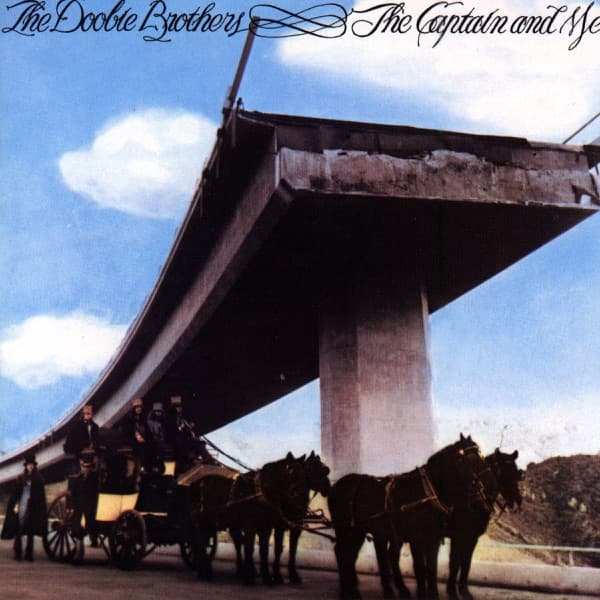
The composition is built on a single move: a massive concrete ramp held aloft by one central pillar planted in the middle of the frame. That pillar splits the picture and anchors everything, while the ramp itself curves away into the distance so that the eye travels the diagonal up and out of the frame before returning, always, to the coach below. Scale becomes the story. The overpass is framed to loom over the small human figures and the horses, and the sheer disproportion between the two is what the picture is about.
Colour and light do the rest of the work. The sky reads a deep, clean blue, and the overpass glows where the sun strikes it before falling into cool shadow underneath. The band stands in that pocket of shade near the pillar, their period coats and hats dark against the pale roadway. Nothing about the light is soft or nostalgic; it is the flat, unforgiving glare of a California afternoon, and that hardness is exactly what makes the horses and the coach look like intruders from a dream rather than a sentimental period tableau.
The typography answers the freeway with its opposite. The band name and title run across the top in an ornate, flowing script that curls and loops like something engraved on an old saloon window or a stagecoach line's signage. Those flourishes echo the antique world of the coach below rather than the brutal geometry of the concrete above, so the lettering itself takes a side in the picture's central argument.
The subject is a Western tableau abandoned under an interstate: a stagecoach where a car should be, a team of horses standing patiently on asphalt they were never bred for. There is something cinematic in it, a staged scene held in bright daylight, and the album extends the conceit past the front. The gatefold opens to reveal the band fully committed to their old-time period clothing, so that opening the sleeve feels like stepping deeper into the staged world.
What gives the image its charge is that it refuses to explain itself. There is no smiling band portrait, no studio backdrop, no easy signal of who these men are or what they play. Instead there is a puzzle. The soaring concrete overhead reads as a monument to modern ambition, and, for anyone who knows the site's history, as a reminder of how quickly such ambition can come down. That double reading turns a period-costume gag into something closer to unease.
The whole thing works because of juxtaposition and restraint. The antique is planted against the aggressively modern, and the friction is left to do the talking. Look up first, then look down; the distance between the two, and the small human figures caught in the gap, is the image's real meaning.