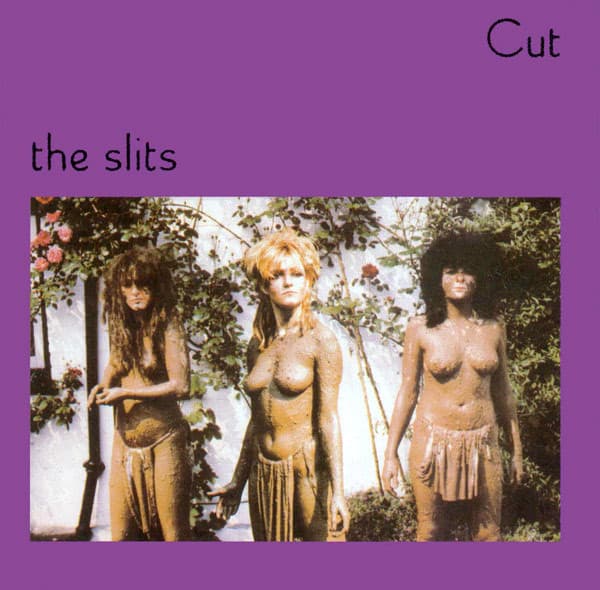
The garden was full of roses, but the Slits had no intention of looking decorative. At Ridge Farm in Surrey, where they were recording their debut album, Ari Up, Viv Albertine and Tessa Pollitt stood before Pennie Smith's camera covered in mud, wearing makeshift loincloths and staring straight ahead. Behind them was the cultivated calm of an English country house. In front of it stood three musicians who had made a career of refusing to behave as anyone expected.
The image was not the record company's first idea. Island had suggested a more conventional photographic approach, and the band pushed back. Smith, a woman they trusted, photographed them at the residential studio. Albertine later recalled the importance of feeling comfortable with the photographer: the band would not have made the same pictures with a male photographer. What might have become another portrait of a young punk group instead became a picture whose terms were set by its subjects.
The mud was part of the day's play, not an elaborate costume commissioned by an art department. Albertine remembered the group egging one another on until they were sitting in it and spreading it over their bodies. They wanted to look like warriors, a tribe standing together. With almost no clothing, they understood that their posture and expressions had to do the opposite of inviting an easy, voyeuristic reading. The resulting photograph is frontal, deliberate and almost stubbornly unsmiling.
There is a contradiction in the setting that makes the picture more unsettling than a simple provocation. The rose garden belongs to a familiar vision of English femininity: carefully tended, picturesque, respectable. The women in front of it refuse that picture. Mud, bare skin and direct eye contact interrupt the domestic scene. It is not a fantasy of escape into the wilderness so much as a challenge staged in the middle of an orderly garden.
The sleeve also makes sense alongside the music. Working with producer Dennis Bovell, the Slits were moving beyond the blunt-force expectations attached to punk. Their songs used reggae and dub's spacious rhythms, elastic bass lines, abrasive guitar and playful voices to invent a sound that did not sit neatly inside an established genre. The cover's mixture of play and confrontation captures that same refusal to choose between seemingly incompatible identities.
The image was photographed by Pennie Smith, whose work also gave the Clash's London Calling its famous front-cover moment. The finished Cut sleeve was credited to Bloomfield/Travis. Those are different jobs: Smith made the photograph; the sleeve designers shaped its presentation as a record package. The cover's force begins with the band's own idea of how they wanted to appear.
The picture was widely discussed and often misunderstood when Cut arrived in September 1979. Some observers read the nudity as spectacle, precisely the response the group had tried to challenge. Pollitt later described the mud-covered shoot as liberating, while Ari Up spoke about rejecting prescribed ideas of how women should look or be sexy. The disagreement between those intentions and some of the reactions became part of the artwork's history.
What remains most striking is the confidence of the three faces. Nothing about the pose asks for approval. Nearly half a century later, the photograph still refuses to behave like a conventional promotional image. It is the Slits introducing themselves on their own terms.