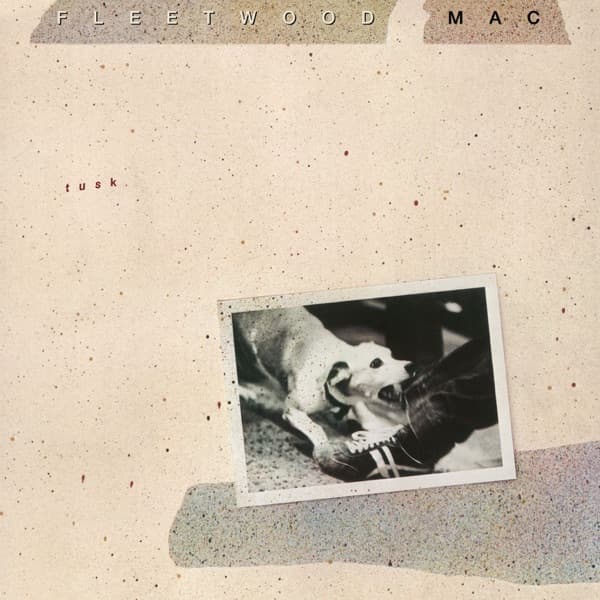
The composition works by isolation. A single small black-and-white snapshot is dropped into the lower-right quadrant of a vast pale field, so the eye has nowhere else to go and lands hard on the one dense object in an otherwise empty frame. That imbalance is what generates the tension: the picture is tiny, yet it dominates, because everything around it has been cleared away on purpose.
The background does the emotional heavy lifting through restraint. It is a speckled off-white, cream flecked with faint dots of red and grey, like paper that has been spattered and left to dry. A soft grey shadow-shape pools beneath the snapshot and drifts toward the lower edge, grounding the floating image and giving it a faint sense of menace, as if the small scene casts a larger stain. After all that negative space, the violence of the photograph feels sudden and clinical rather than dramatic.
The typography holds the same coolness. At the top the band name is set in wide, spaced, sans-serif capitals, FLEETWOOD on the left and MAC on the right, with a pale peach diagonal streak cutting across the upper-left corner behind the letters, the only warm gesture on the sleeve. Below the name, small and lowercase and quiet, sits the word tusk in muted red, dwarfed by the space around it. Nothing shouts. The understatement is the statement, and it registers as stark, cold, almost clinical.
Then there is the materiality. On the vinyl jacket that biting-dog picture is embossed, raised off the surface so a finger can run over the struggle. This turns a two-dimensional snapshot into something physical: the design invites you to touch the moment of the bite, to feel the tension with your hand as well as your eye.
The reading of the central image is where the cover earns its charge. The dog is caught in what looks like real aggression, jaws clamped, body pitched forward, and for two seconds it reads as pure violence. But the animal is only playing, and once that registers the whole frame flips into comedy. The image lives in that double take, holding threat and game in the same instant, which is exactly why it keeps the eye. It is a picture that lies to you and then confesses, and the confession is funnier than the lie was frightening.
Taken together, the choices make a single argument through their coldness: enormous empty space, muted flecked colour, small quiet type, and one raised, ferocious-looking snapshot that turns out to be harmless. The whole design is an anticlimax staged as a shock, an image that pulls you in with menace and pays you off with a joke.