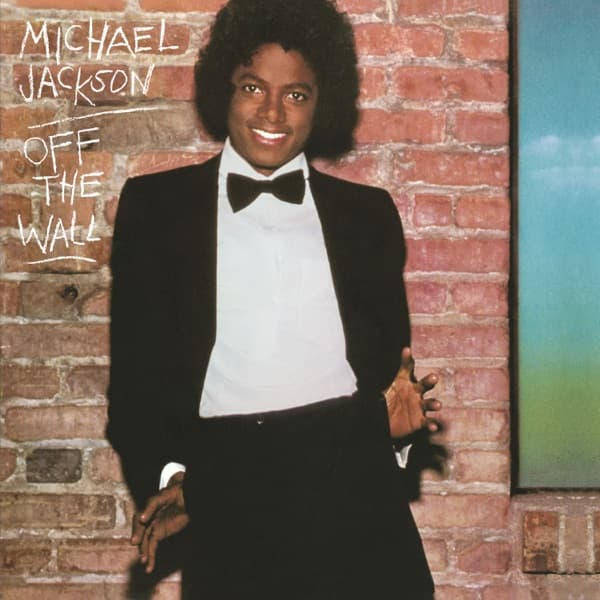
Start with the suit, because Salisbury built everything around it. A classic black tuxedo, sharply tailored, sits over a crisp white shirt and a black bow tie tied a touch loose, the way someone wears formalwear that belongs to them rather than the other way around. The tuxedo is the whole argument of the image. It reads as a metaphor for maturity, the visual mark of Jackson stepping out from under his father's control and standing as his own star. Black and white against everything else makes the figure read instantly as adult, deliberate, arrived.
Then the wall. Jackson leans against plain red brick, the mortar lines running rough and irregular behind him, one hand tucked into his trouser pocket and the other resting easily at his side. It is a deliberately ordinary backdrop, and that ordinariness does the work. Formalwear set against bare brick keeps the elegance from stiffening into a studio portrait. He looks approachable and relaxed, a man who could stand anywhere and still command the spot.
The most decisive choice is the one that looks like an accident. The top of Jackson's head is cut off at the frame's edge. It is not sloppiness. The tight crop pulls attention straight down to the eyes, which meet yours directly, and to the wide, unguarded smile beneath them. Cover the top of the image with your hand and the effect is plain: without the crop you read the whole figure, with it you read the face. The framing forces the picture to be about a person rather than an outfit.
The hand-lettered type in the upper left leans into the same warmth. "MICHAEL JACKSON" and "OFF THE WALL" are rendered in loose, casual white script, with the words "OFF" and "WALL" each underlined by a quick stroke. Nothing about the lettering is corporate or rigid. It sits against the brick like a note scrawled by someone confident enough not to fuss over it, echoing the ease of the pose rather than announcing a product.
Colour is almost entirely warm, red brick filling the frame, so the eye has nowhere to wander except back to the face. The single interruption is at the right edge: a sliver of blue and green light, the only cool tones in an otherwise warm picture. It functions as a small release valve, a hint that there is a wider space beyond the wall, without ever competing with the figure.
Put the choices together and the image resolves into a single statement. The tuxedo supplies the maturity, the brick supplies the ease, the crop supplies the intimacy, and the lettering supplies the informality that keeps all of it human. A campfire and children's clothes would have kept Jackson small, a boy frozen in the frame that made him. Instead the tuxedo, the brick, and a crop that dares to slice off the top of his head say the opposite thing at once: here is a man, meet his eyes, he has already arrived.