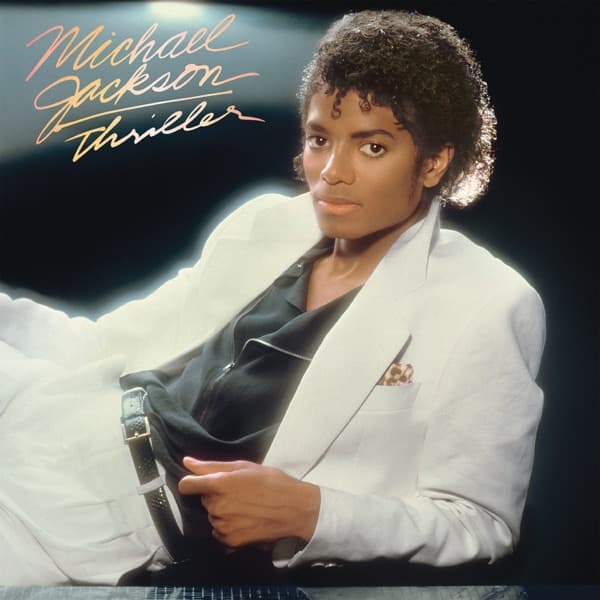
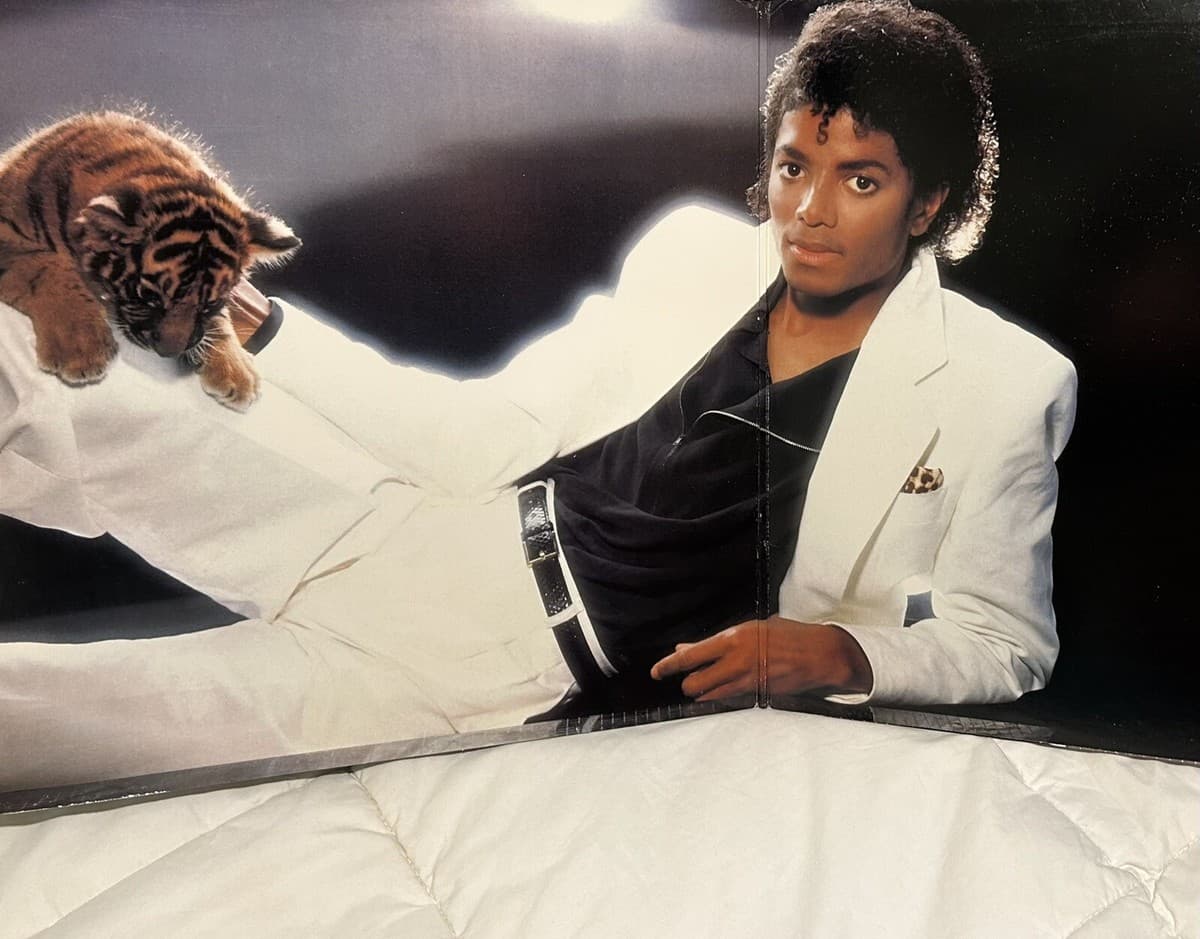
The composition is horizontal and low, with Jackson stretched diagonally across the frame. That angle sets the eye moving: it starts at his face in the upper region and travels down the bright line of the white suit to his clasped hands near the bottom, so the picture reads as a single unbroken sweep rather than a static portrait. Nothing interrupts the path, and the low, reclining placement gives the figure an air of unbothered ownership of the space.
Zimmerman framed Jackson against a glossy dark backdrop that fades from deep blue-black to a softer wash near the top. This is the kind of unbroken studio sweep that erases any competing detail and pushes all attention onto the figure. Because the background recedes, the white tailoring becomes the loudest thing in the frame, its bright planes advancing while the darkness holds it. The lighting is warm and clean, modeling his face and the crisp surfaces of the jacket, so the tonal story is essentially a contrast between an illuminated white subject and an enveloping dark ground.
The wardrobe choices do quiet work. The white blazer and trousers read as glamour and poise, while the dark open-collared shirt beneath keeps the look from tipping into formality, giving it an ease that matches the loose crossed arms. The leopard-spotted pocket square is the one flash of pattern and wildness in an otherwise controlled palette, a small note of danger tucked into all that calm. His curls catch the light and his gaze meets the lens directly, which turns the relaxed pose into something more deliberate: he is at rest but entirely aware of being looked at.
Up in the top-left corner, in a flowing script that shifts through pink and warm gold, sit the words Michael Jackson, and beneath them, Thriller. The handwritten, ribbon-like lettering feels almost casual against the polished photograph, a soft cursive signature laid over a hard glamour image. That tension between the personal, hand-drawn type and the slick studio picture is central to how the cover works. The type humanizes the image; the photograph elevates it.
Put together, the frame is an exercise in projected control. The reclining posture, the steady eye contact, and the clean white tailoring all say confidence and command, while the leopard accent and the direct look add just enough charge to keep it from being merely pretty. The image works because it accomplishes so much with so little: one figure, one suit, one dark sweep, a smile, and a line of script. It is glamour reduced to essentials, which is exactly why the eye stays on it.