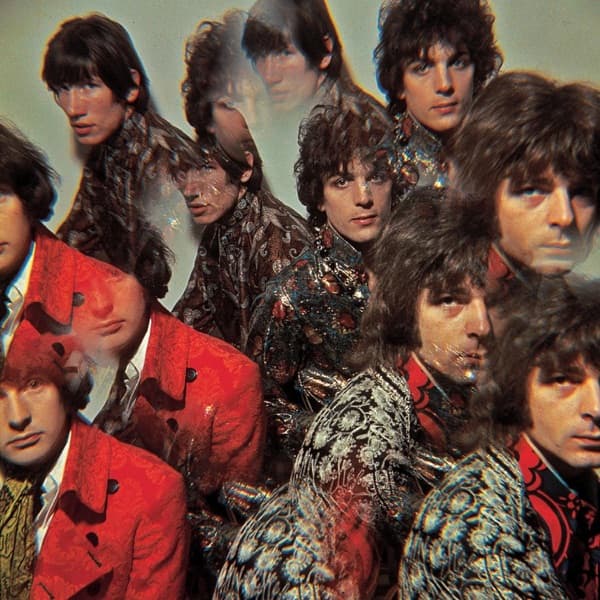
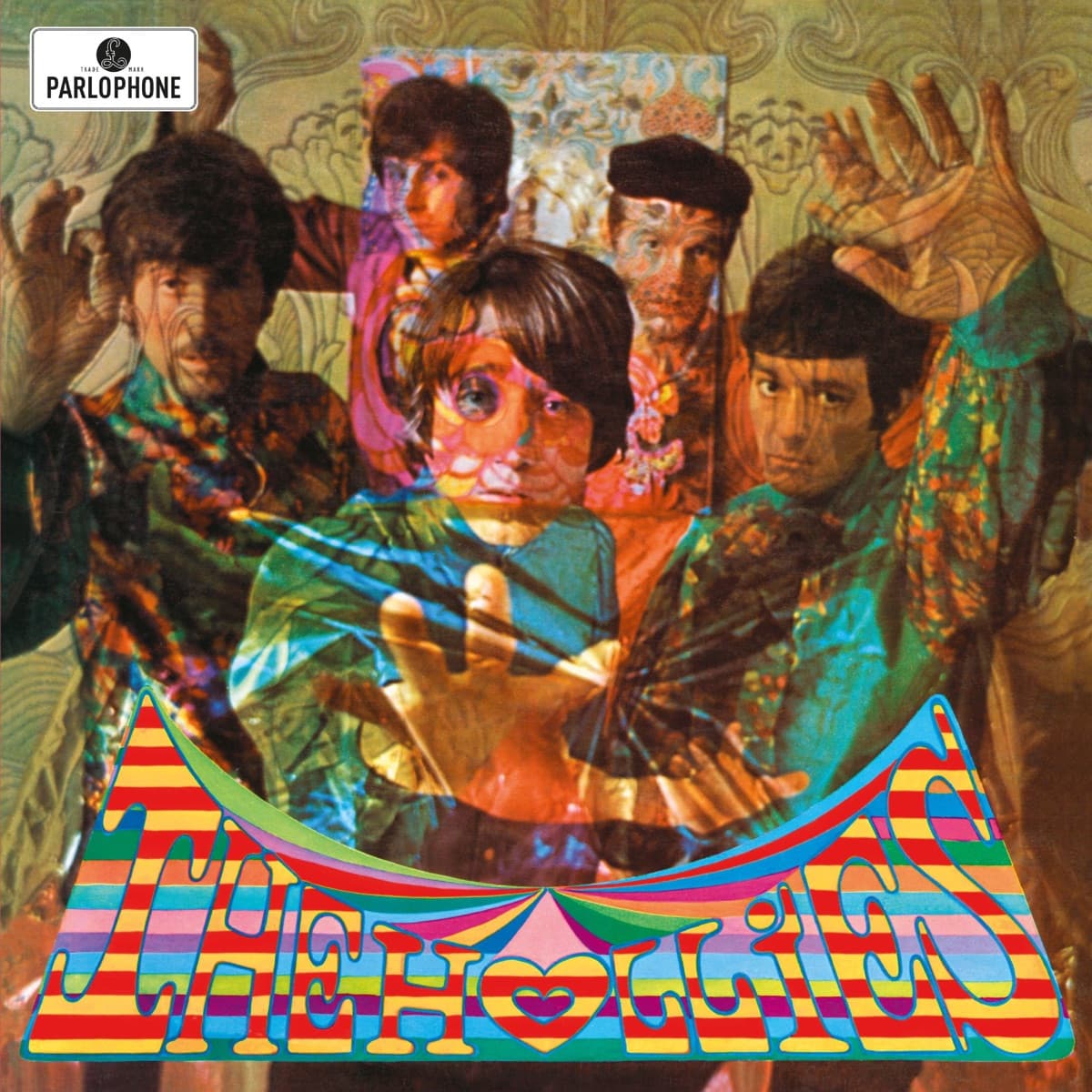
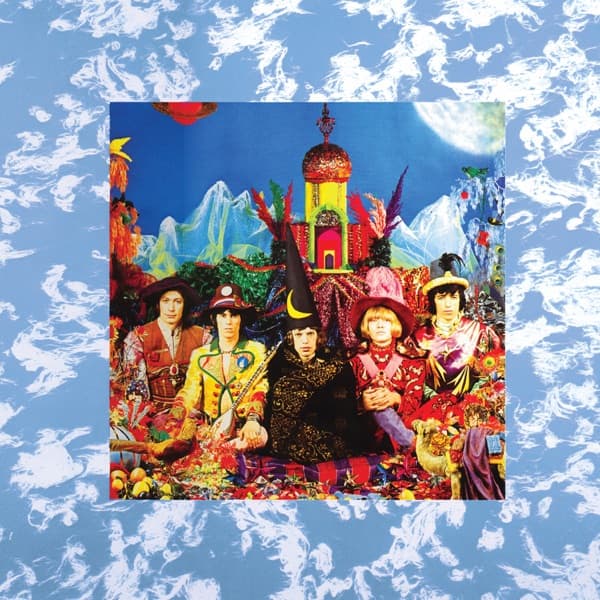
The image reads first as a puzzle of multiplication. Each of the four band members appears three or four times, and the duplicates blur into themselves and into one another, so the eye can never settle on a boundary between one man and the next. This is a kaleidoscopic view: the picture presents the group as if seen through cut glass, faces fanning out and fusing at the edges.
There is, briefly, a way in. A single central, steady face sits at the middle of the frame, more resolved than the smear of copies around it, and the eye lands there first. Then it gives up trying to hold any one figure, sliding across the repetitions with no place to rest. That refusal of a stable focal point is the whole point: the composition enacts disorientation rather than merely depicting it.
Colour carries as much of the meaning as the fracturing does. The palette runs warm and metallic, coppers, reds, and a hazy silver-grey binding the overlapping layers together. Against that haze the clothing almost vibrates. The scarlet brocade jacket over a white shirt is the loudest single note, an anchor of pure saturation; the jewel-toned paisley silk and the dense metallic-threaded floral coat multiply the visual noise so that pattern piles on pattern until the fabrics seem to shimmer. The brightness is not decorative excess. It amplifies the sense of sensory overload, dressing the multiplication of faces in a corresponding riot of surface.
The figures themselves resist the warmth. Long, tousled hair and cool, unsmiling gazes give the four a detached, otherworldly poise, as if they exist slightly outside the ordinary world the viewer occupies. The steadiness of those expressions plays against the instability of the duplication, and that tension, calm faces caught in a dissolving image, is where the cover generates its unease.
Read as a whole, the image works because form and subject collapse into the same statement. The music inside is psychedelic, and the picture does not illustrate psychedelia so much as reproduce its perceptual signature: the sense that a face could split, double, and drift, that the edges of things are negotiable. The kaleidoscopic treatment turns four musicians into a single hallucinatory field of overlapping selves. What makes it more than a trick is that the eye keeps returning to count and keeps failing, so the viewer is repeatedly pulled back into the same act of disoriented looking that the sleeve is about. The picture communicates the era not by describing it but by briefly imposing its way of seeing on anyone who looks.