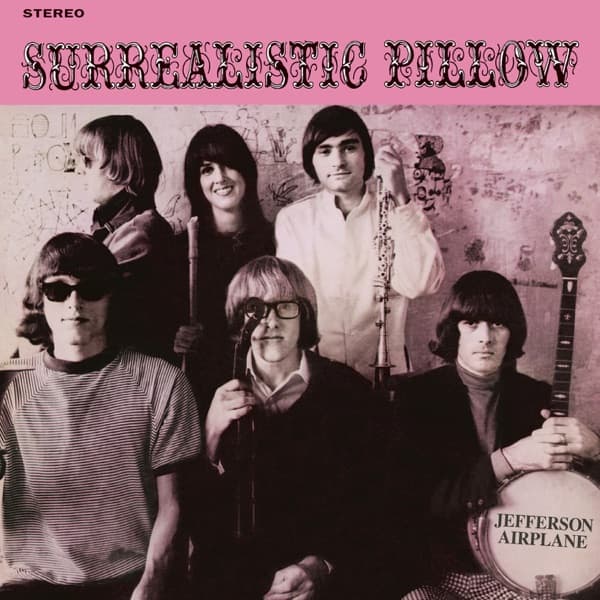
Herb Greene didn't just photograph Jefferson Airplane for Surrealistic Pillow — he transported them into another dimension using infrared film. The technique, rarely used for album covers at the time, created an ethereal, dreamlike quality that would become one of the most visually striking images of the psychedelic era.
The concept emerged from Greene's fascination with experimental photography and the band's own psychedelic explorations. Grace Slick and the rest of Jefferson Airplane wanted cover art that would match the otherworldly nature of songs like "White Rabbit" and "Somebody to Love." Greene proposed using infrared film to create something that had never been seen on an album cover before.
The photo session took place in Golden Gate Park in San Francisco, with Greene using specialized infrared film that captured light wavelengths invisible to the human eye. This technique transformed the natural landscape into an alien world — foliage appeared white and luminous, while the sky took on dark, mysterious tones. The band members themselves seemed to glow with an inner light.
Greene was already known in San Francisco's music scene for his experimental approach to rock photography. He had previously worked with other Bay Area bands and understood the visual language of the emerging counterculture. His infrared technique required careful calculation of exposure times and filters, making each shot a calculated risk.
The infrared process meant that Greene couldn't see exactly what he was capturing through the viewfinder. The film registered heat signatures and reflected infrared light in ways that created unpredictable, magical results. Trees and grass became luminescent, while shadows took on strange, sculptural qualities.
RCA Victor initially wasn't sure what to make of the unusual image. Record executives were more accustomed to straightforward band photos, and the surreal quality of Greene's infrared photography was unlike anything in their catalog. However, the band insisted on using the image, recognizing that it perfectly captured their musical vision.
When Surrealistic Pillow hit record stores in February 1967, the cover immediately caught attention. Music journalists and fans had never seen anything quite like Greene's infrared vision. The image became inseparable from the album's psychedelic sound, creating a complete sensory experience.
The cover's success helped establish infrared photography as a legitimate artistic technique in album art. Other photographers began experimenting with the process, though few achieved the perfect balance of technical skill and artistic vision that Greene brought to this session.
Greene's work influenced a generation of album cover photographers who began pushing beyond traditional portraiture. The success of Surrealistic Pillow proved that experimental techniques could enhance rather than distract from an album's commercial appeal.
The cover became a visual symbol of the Summer of Love and San Francisco's psychedelic scene. Greene's infrared technique captured not just the band's appearance but the very essence of their era's experimental spirit.
Decades later, Greene revealed that he almost didn't bring the infrared film to the session, considering it too experimental. That last-minute decision created one of rock's most visually distinctive album covers.