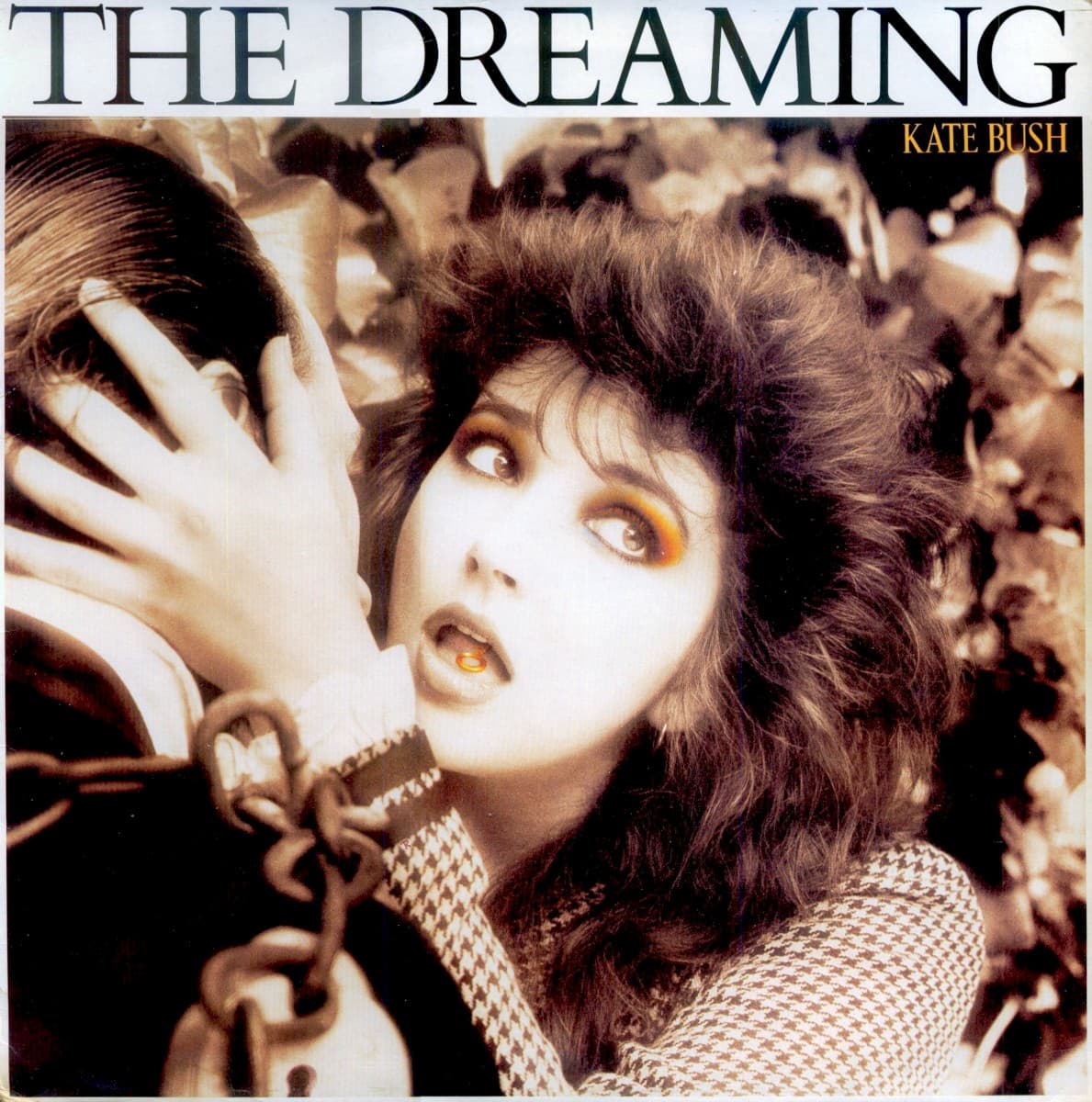
The cover of The Dreaming begins with a kiss and a key. While recording the album, Kate Bush was told the story that Harry Houdini's wife Bess could pass him a key with a kiss before an escape. Bush was immediately struck by the image. The detail worked its way into the lyric of 'Houdini' — 'with a kiss, I'd pass the key' — and then became the idea for the album sleeve itself.
In the photograph, Bush takes the role of Bess Houdini. Her then-partner and longtime musical collaborator Del Palmer stands in for Harry. Their faces nearly meet, but the key interrupts the kiss: a tiny bright object held between Bush's lips, both practical prop and emotional center of the frame.
The photograph was taken by Bush's brother John Carder Bush, whose images had become increasingly important to her record packaging. The family connection suited the intimacy of the concept. This was not a celebrity portrait built around glamour or distance. It was a staged scene drawn directly from a song, photographed closely enough that the viewer feels almost uncomfortably near.
Bush later returned to the Houdini story when discussing a special edition of The Dreaming, explaining that the image of Bess passing the key had been so powerful she knew it belonged on the front cover. That direct explanation removes the need for speculative symbolism. The key is there because the album itself contains the story, and the sleeve freezes the moment just before the escape.
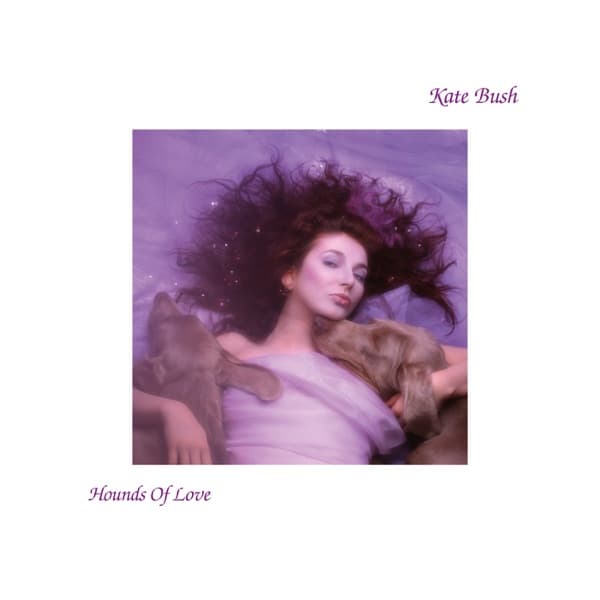
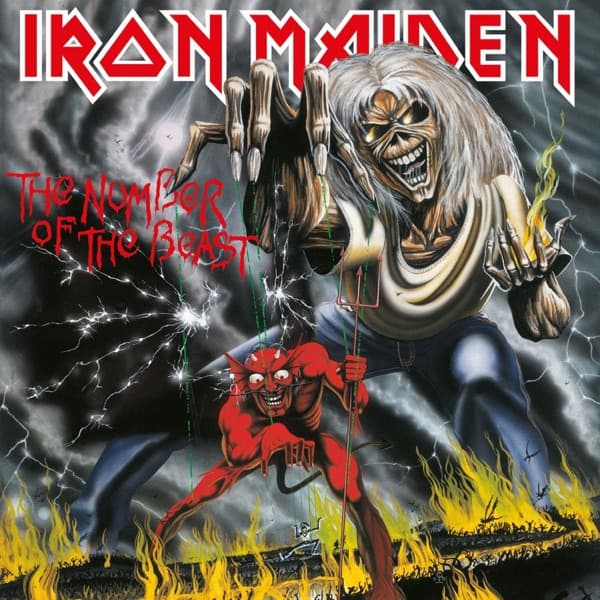
The result is one of Bush's most narrative covers. Unlike the dog-filled dream state of Hounds of Love or the painted density of Never for Ever, The Dreaming gives us a single action. It is quiet, theatrical and slightly claustrophobic — a fitting doorway into an album built from sudden voices, distorted rhythms and ideas that refuse to stay in one place.
Inside the design
The composition is dominated by faces. Bush and Palmer fill almost the entire frame, leaving little visual space for the viewer to retreat into. Their closeness creates tension before the key is even noticed. Once the eye finds it, the entire picture reorganizes around that tiny metallic shape.
The sepia treatment makes the photograph feel older than 1982, helping the Houdini reference slip into a historical register without becoming literal period costume. Most of the image remains warm and muted, while the key and Bush's eye makeup retain a stronger visual presence.
The gesture is suspended at exactly the right moment. If the kiss had already happened, the story would be over. If the figures were farther apart, the image would lose its tension. By photographing the instant before transfer, the cover becomes a picture about possibility and trust rather than completion.
The typography remains subordinate to the scene. The album's identity is carried by the photograph itself, especially the unusual central prop. Even at small size, the intimacy of the two faces makes the sleeve immediately distinct from conventional artist portraiture.
Historical context
The Dreaming arrived in 1982 as the first Kate Bush album she produced entirely herself, and its visual confidence mirrors that creative independence. The record was experimental, expensive and unusually dense, pushing her farther from the expectations attached to a successful young pop singer.
By this point Bush had already developed a strong interest in making images inseparable from songs. Videos, stage ideas, photographs and record sleeves were not separate promotional tasks; they were extensions of the same storytelling instinct. Turning a lyric from 'Houdini' directly into the cover is one of the clearest examples of that approach.
The sleeve also belongs to a period when album packaging still gave artists a large physical canvas. A close, sepia image on an LP could feel almost cinematic, inviting the listener to inspect details such as the key, the makeup and the texture of the photograph before hearing a note.
The album's reputation has grown substantially since its original release. Once treated by some critics as an overcomplicated detour, The Dreaming is now widely regarded as a key statement of Bush's independence and experimentation. The cover has aged along with that reassessment, becoming less an odd portrait and more a concise visual summary of the record's theatrical intelligence.