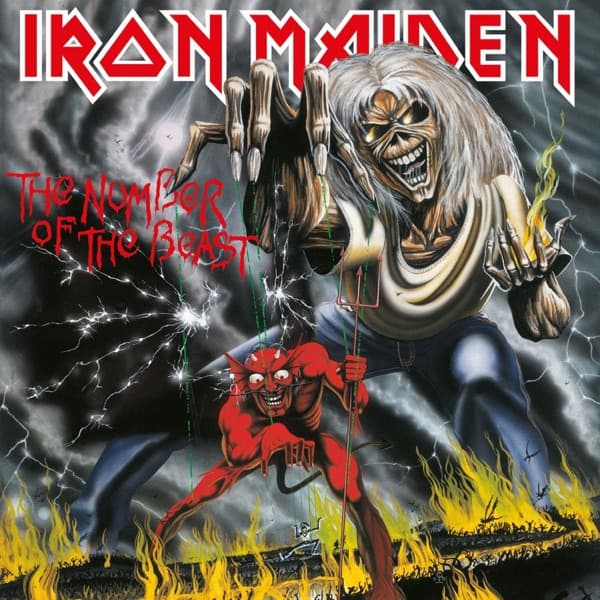

Derek Riggs painted what would become heavy metal's most controversial and iconic album cover by making Iron Maiden's mascot Eddie more powerful than Satan himself. In the hellish landscape of The Number of the Beast, Eddie pulls the strings while the devil dances below, a brilliant visual metaphor that flipped religious imagery on its head.
The concept emerged from the album's biblical themes and Steve Harris's fascination with horror literature and film. Riggs had already established Eddie as Iron Maiden's visual identity through previous covers, but this time he wanted to push the boundaries further. The artist conceived Eddie not as Satan's servant, but as his puppet master—a deliberate provocation that would make religious groups furious.
Riggs painted the cover in his signature hyper-detailed style, working with oils on canvas to create every flame, shadow, and grotesque detail. He positioned Eddie looming above a fiery pit where a horned devil writhes in apparent torment, connected to Eddie's clawed hands by invisible strings. The composition places Eddie in the position traditionally reserved for God or higher powers in religious art.
The painting process took weeks as Riggs meticulously crafted each element. He gave Eddie prominent devil horns for the first time, but kept him clearly in control of the traditional Satan figure below. The background flames were painted with multiple glazes to achieve their otherworldly glow, while Eddie's new demonic features required careful attention to maintain his recognizable skeletal grin.
Derek Riggs had become Iron Maiden's unofficial visual architect by 1982, having designed their previous album covers and single artwork. His background in technical illustration gave him the precision needed for Eddie's intricate details. Rod Smallwood, the band's manager, gave Riggs creative freedom while knowing the imagery would generate massive controversy.
EMI Records initially worried about the cover's religious implications but ultimately supported the band's vision. Bruce Dickinson, Iron Maiden's newly recruited vocalist, embraced the theatrical horror imagery that matched his operatic singing style. The band members themselves were thrilled with Riggs's latest Eddie incarnation, seeing it as the perfect visual representation of their heaviest album yet.
Christian groups across America and the UK immediately condemned the album cover as satanic propaganda. Several record stores refused to display it, while religious leaders organized boycotts and record burning events. The controversy only fueled sales, making The Number of the Beast Iron Maiden's breakthrough album and establishing the cover as a lightning rod for debates about heavy metal's supposed demonic influences.
The album cover's impact transcended music, becoming a cultural touchstone for discussions about censorship, religious freedom, and artistic expression. Tipper Gore and the Parents Music Resource Center later cited it as an example of music industry irresponsibility. The imagery appeared on countless t-shirts, patches, and posters, spreading Eddie's demonic visage far beyond metal circles.
Riggs's design influenced an entire generation of metal album covers, establishing the template for horror-themed artwork that combined religious imagery with fantasy elements. Bands like Slayer, Megadeth, and countless others drew inspiration from the cover's bold blasphemous imagery. The puppet master concept became a recurring theme in metal artwork, symbolizing control over dark forces.
The cover art spawned merchandise empires and inspired stage productions featuring massive Eddie puppets and inflatable devils. Iron Maiden's live performances began incorporating elements from the cover, with Eddie appearing as a giant puppet master during the title track. The imagery became so iconic that it's now displayed in art galleries and exhibitions about album cover design.
Despite creating dozens of Eddie variations over the years, Derek Riggs considers The Number of the Beast cover his masterpiece, the perfect fusion of his artistic skills and Iron Maiden's musical vision. The painting's original canvas remains one of the most valuable pieces of rock memorabilia, having sold for over $90,000 at auction.