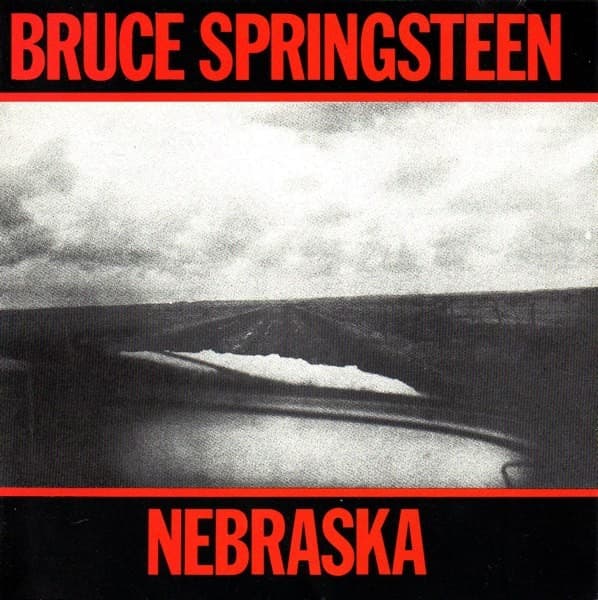
The cover of Nebraska does not show Bruce Springsteen at all. An empty road runs toward a low horizon under a pale, threatening sky. The landscape is black and white; the only strong color comes from the red capital letters naming Springsteen above the photograph and Nebraska below it. For an artist whose face had already become a central part of his visual identity, the absence is the first thing the sleeve communicates.
The photograph was not made for the album. David Michael Kennedy took it in the winter of 1975, years before Springsteen recorded Nebraska, shooting through the windshield of an old vehicle. When Columbia art director Andrea Klein began developing the 1982 package, Springsteen wanted a landscape rather than another portrait. Klein introduced him to Kennedy's work, Kennedy supplied a selection of images, and Springsteen chose the road photograph that became the front cover.
That chronology matters because the image can look so perfectly matched to the record that it is tempting to imagine it was staged after the music existed. It was not. The photograph came first. What Klein and Springsteen recognized was a pre-existing image whose emptiness, distance and weather already carried the emotional temperature they wanted for the sleeve.
The original release credits identify Andrea Klein with album design and David Kennedy with photography. Klein's role is visible in what surrounds the image as much as in the image choice itself. The red typography gives the otherwise monochrome sleeve a hard visual interruption, while the simple placement above and below the photograph keeps the road in control of the square. Nothing is added to explain the scene.
Springsteen's official site describes Nebraska as a raw, haunted acoustic record populated by lost souls. The cover works by refusing to illustrate any one of those characters. Instead, it gives them a world: a road with no visible destination, seen from inside a vehicle, with the viewer placed where a driver would be. The human figure is absent, but human movement is implied by the point of view.
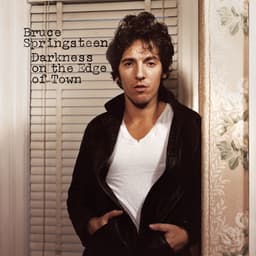
Kennedy also photographed Springsteen for the package, including an interior image made at Kennedy's home in Brewster, New York. Springsteen later described that interior portrait in ghost-like terms: present, but not fully present. That makes the contrast with the front especially useful. The outside gives us the landscape first; the artist remains secondary, withheld until the package is opened.
Nebraska was released in 1982 on Columbia. The official Springsteen site currently gives September 30 as the release date, while the reviewed US MusicBrainz pressing is dated September 20. Because reputable release records differ on the exact day, this entry treats 1982 as the stable release fact rather than forcing false precision.
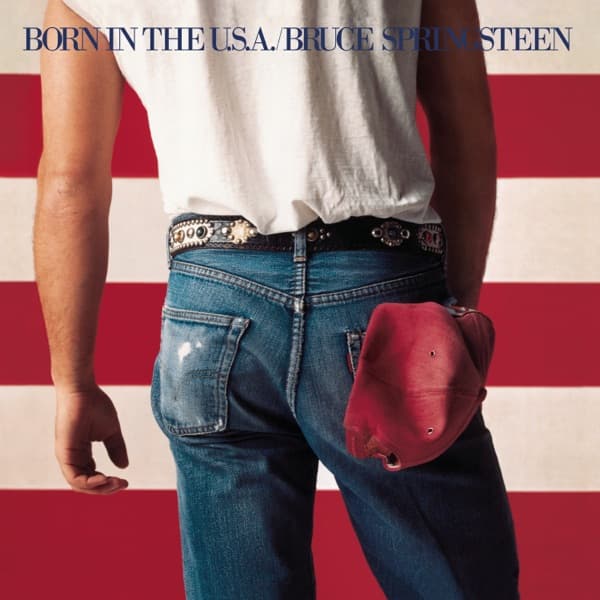
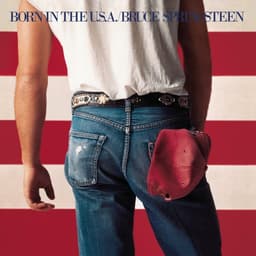
Two years later, Andrea Klein would art-direct and design Born in the U.S.A., another Springsteen sleeve built around an American image but almost its visual opposite. Nebraska is empty road, grey sky and a missing face. Born in the U.S.A. is body, flag and saturated red-white-blue. Seen together, the two covers show how strongly Klein's art direction responded to the character of each record rather than imposing one fixed Springsteen look.