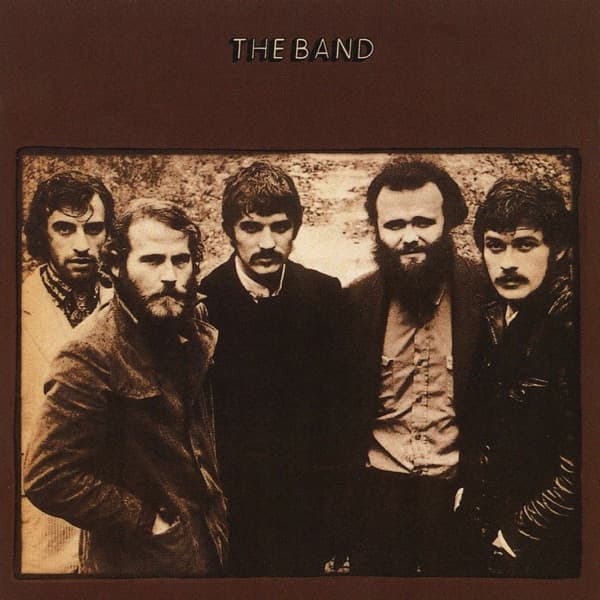
Look at the picture and the nickname explains itself. The border is a deep russet, chocolate brown, and the photograph inside is printed in warm sepia rather than crisp black and white. It has the look of an old tintype, the kind of hand-held portrait a frontier family might have sat for, and it has been likened to a Matthew Brady Civil War-era photograph, matching the album's old-time, roughly 1865-era Americana themes.
The composition is unfussy and confrontational. The five men are arranged in a loose row, filling the horizontal frame, their bodies overlapping slightly so they read as a single unit rather than five individuals. Their coats and jackets read as dark, heavy, workmanlike. The faces are lit unevenly, some catching more of the flat outdoor light than others, which is where the guarded, almost suspicious mood comes from: the eyes keep refusing to give anything away.
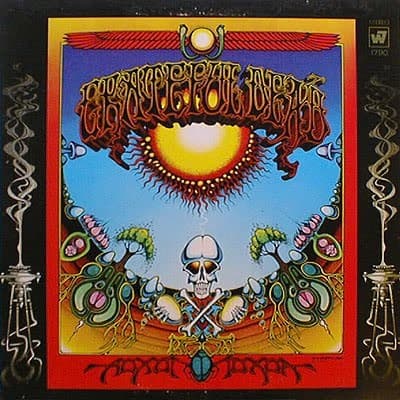
There is no set, no props, no logo cluttering the scene. Behind them, the out-of-focus tangle of branches and the washed-out earth could belong to any rural winter of the last century. That negative space does real work, dissolving any fixed time or place and letting the antique tone take over. Where contemporaries were drenching covers in fluorescent chaos, acid colors and kaleidoscope patterns, this frame offers the muted palette of an old daguerreotype. The backward pull was the whole point: the aged look trades the psychedelic swirl of the late 1960s for antiquated imagery drawn from American folklore.
The only concession to modernity sits at the very top, floating above the photograph in the brown margin: the words THE BAND, set in plain, spaced capital letters. It is the sort of typography that gets out of the way. No flourish, no color, no attempt to compete with the faces below. The name is almost an afterthought, which suits a group that chose anonymity from the very start. Calling yourselves simply The Band is a refusal to perform a persona, and the cover honors that refusal by giving you nothing but the men themselves.
That anonymity was strategic, and the photograph was central to it. Early on, the public's only image of the group was this picture. There were no cartoon logos, no glamour shots, no dramatic staging to latch onto, just these five faces looking older and stranger than their years. The scarcity of imagery fed the mystique. If all you had was this one antique-looking portrait, the group became a puzzle, a rumor, a set of songs attached to men who seemed to have stepped out of the wrong century.
The cover also quietly erases where the music was actually made. Nothing in the frame suggests California, sunshine, or a movie star's backyard. The eye lands first on the faces, then drifts to the brown surround that frames them like an old photograph in an old album, then back to the eyes. The whole picture works because it does not invent a fantasy world; it simply photographs the present so that it looks like the past.