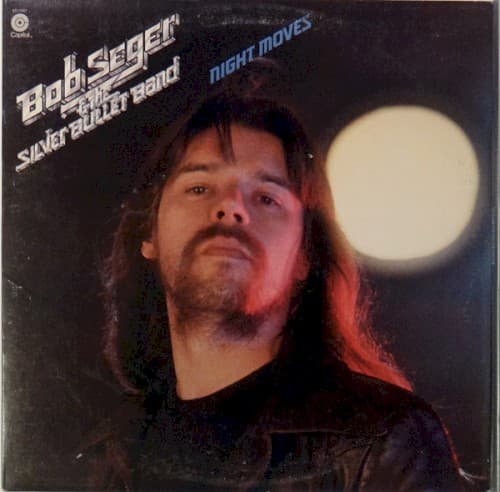
The man behind Night Moves' enduring cover image was Tom Bert, a Bay City, Michigan native who had already established himself as a premier rock and roll photographer when he was commissioned for Bob Seger's career-defining album.
By 1976, Bert had already made his mark photographing Neil Diamond's Hot August Night cover in 1972, launching a relationship that would span over a dozen album covers. His reputation for capturing the essence of rock artists without being pushy or intrusive made him the perfect choice for Seger's breakthrough album.
The Night Moves session represented more than just another album cover shoot. This was the album that Capitol Records hoped would finally break Seger out of his regional Detroit success and into national stardom. The photograph needed to capture both Seger's working-class authenticity and his readiness for the big time.
Bert's approach to the Night Moves shoot was characteristically understated. Known for treating everyone with respect and never being pushy, Bert had developed a unique style of portrait photography that put his subjects at ease. His low-key demeanor allowed artists to be themselves in front of the camera.
The photographer brought his younger brother Terry along as an assistant, a practice he had adopted by the mid-1970s. Terry Bert would play crucial roles in many of his brother's most memorable shoots, often contributing atmospheric touches that elevated the final images.
The Night Moves cover session was part of a broader creative package that Bert was crafting for Seger. He had previously shot the cover for Seger's 1975 album Beautiful Loser, where he famously had Seger seated in formal wear complete with top hat and cane, then had Terry light up a cigarette to puff smoke behind Seger for atmosphere.
The album's release on October 22, 1976, transformed Seger from a regional favorite into a national star. The cover photograph became iconic as the album sold over six million copies and eventually went 6x Platinum, establishing Seger as a major force in American rock music.
Critically, the album received overwhelming praise, with Rolling Stone's reviewer calling it one of the best albums of the year and noting that it offered "rock & roll in the classic mold: bold, aggressive and grandiloquent." The cover image became synonymous with this critical and commercial breakthrough.
Bert's photographic composition for Night Moves perfectly captured the album's themes of nostalgia and American authenticity. The straightforward portrait approach complemented the album's heartland rock sound and Seger's everyman persona, avoiding any artifice that might detract from the music's emotional directness.
The cover's typography and overall design reflected Capitol Records' confidence in the project. Unlike some of Seger's previous releases, this packaging suggested major label backing and national ambitions, with Bert's photograph serving as the centerpiece of a professionally crafted presentation.
The success of Night Moves led to an ongoing relationship between Bert and Seger. Bert would go on to photograph the cover of Seger's first number-one album, Against the Wind, in 1981, where he won a Grammy for Best Recording Package for his photographs of Bob and the Silver Bullet Band on the inner sleeve.
Bert's work on Night Moves influenced a generation of rock album photography, demonstrating how straightforward portraiture could be more powerful than elaborate concepts. His ability to capture the essence of heartland rock through simple, honest imagery became a template for roots rock album covers.
The photographer's final collaboration with Seger came with 1983's The Distance, capping a creative partnership that spanned Seger's most successful period. Bert's work helped define the visual identity of one of America's most beloved rock artists during his commercial peak.
Decades later, Tom Bert became the first honorary inductee to the Michigan Rock and Roll Legends Hall of Fame, with his Night Moves photograph cited as one of the most recognizable album covers in rock history, proof that sometimes the most powerful images are the most direct ones.