Robert Crumb was paid a measly $600 to design what would become one of rock's most cherished album covers, creating his masterpiece in just a few days at his kitchen table. The legendary underground cartoonist had no idea he was crafting an icon that would influence album art for decades.
Columbia Records originally wanted a glossy photograph of Janis Joplin and the band for Cheap Thrills. The label's art department had already commissioned a standard rock band photo shoot, complete with psychedelic lighting effects typical of 1968 album covers.
Janis Joplin herself suggested using Crumb's artwork instead, having seen his underground comic strips in San Francisco's counterculture scene. She convinced the band and label that Crumb's distinctive style would better capture their raw, authentic sound than any polished studio photograph.
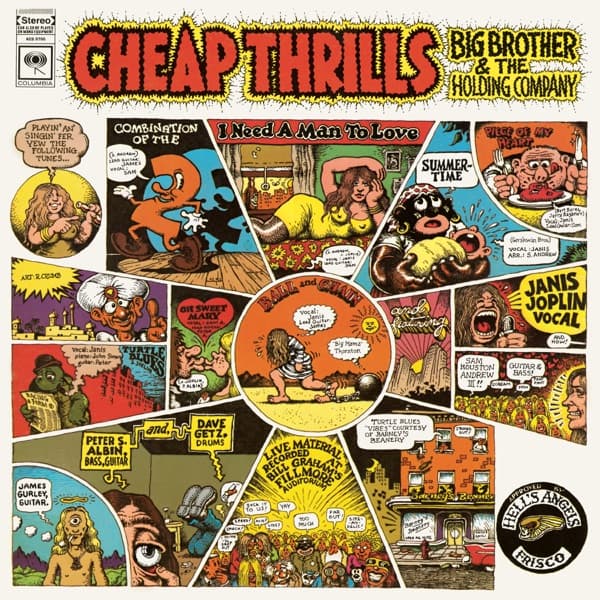
Crumb worked entirely by hand using pen and ink, creating individual cartoon panels for each song title around the album's border. He drew Joplin as a wild-haired blues mama in the center, surrounded by his trademark cast of eccentric characters dancing and cavorting in pure comic book style.
The cartoonist included himself in the artwork, drawing a small self-portrait in the bottom right corner signing his name. Crumb populated the cover with his signature visual vocabulary: curvaceous women, bug-eyed men, and anthropomorphic musical instruments all rendered in his instantly recognizable crosshatched technique.
Robert Crumb was already gaining recognition in underground comics through his *Zap Comix* series, but Cheap Thrills introduced his art to mainstream rock audiences. His collaboration with Big Brother and the Holding Company represented a perfect marriage of counterculture comics and psychedelic rock aesthetics.
Columbia Records executives initially worried that Crumb's cartoonish approach would cheapen the album's commercial appeal. However, the cover became an immediate hit with both critics and fans, who praised its authentic connection to San Francisco's hippie culture and its refreshing departure from typical rock photography.
The album cover helped establish Crumb as one of America's most important cartoonists while proving that hand-drawn artwork could compete with photography in the rock marketplace. Music journalists celebrated the cover's originality and its perfect visual representation of the band's freewheeling musical style.
Cheap Thrills inspired countless rock musicians to seek out underground comic artists for their album artwork throughout the 1970s and beyond. The cover demonstrated that album art could be high art, folk art, and commercial art simultaneously without sacrificing any of its power.
Crumb's design became a template for alternative rock aesthetics, influencing everyone from punk bands to indie rock artists who wanted to signal their underground credibility. The cover's success proved that authenticity and artistic integrity could triumph over corporate marketing strategies.
Decades later, Robert Crumb admitted he had no idea the album would become so influential, calling it simply "a job" that helped pay his rent during his early cartooning career.