The most famous thing about the cover of Odessey and Oracle began as an accident. Terry Quirk, the illustrator who created the sleeve, knew The Zombies personally: he had gone to school with Chris White and Colin Blunstone, attended art school with White, and shared a North London flat with White and Rod Argent while the album was taking shape. That closeness helps explain why the artwork feels less like an outside commission than another artifact of the band's creative circle.
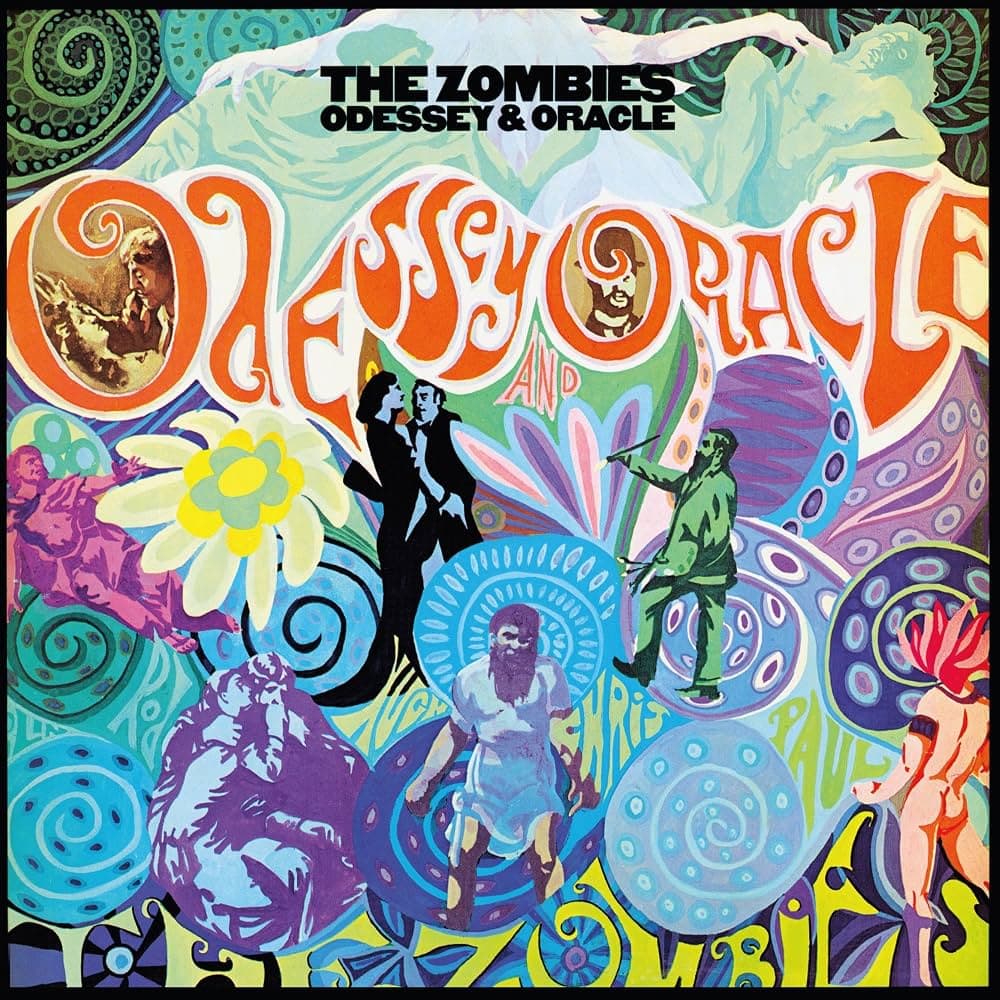
Quirk remembered being with the group while they were discussing possible album titles late at night. Sitting with a pad and pencil, he began turning the words into the floral, curling lettering that would define the sleeve. When “odyssey” came up, he wrote it as “odessey.” Then came “oracle.” The band liked what he had drawn and encouraged him to develop it, adding color and figures related to the songs.
The spelling error became permanent. Quirk later dismissed the elaborate explanations that accumulated around it: there was no hidden linguistic scheme behind the extra “e.” Rod Argent told a similarly revealing version of the story. By the time the mistake was noticed, the artwork was effectively too far along to change, so the band invented a more flattering explanation involving “ode” and a journey through song. For years, that improvised story helped turn a typo into mythology.
That history changes the way the cover reads. The title does look as though it might contain a deliberate puzzle because Quirk's lettering is already dreamlike and decorative. The words bend into the illustration instead of sitting above it as ordinary typography. Small figures, plantlike shapes and bright areas of color fill the composition, giving the sleeve the handmade density associated with late-1960s psychedelia without losing its storybook quality.
The artwork also arrived at an unusual moment in the band's history. The Zombies recorded the album in 1967, including sessions at Abbey Road, but the group broke up before the record became the belated success now associated with “Time of the Season.” That gives the sleeve an unintended poignancy. Quirk was illustrating a living creative project among friends; history turned the finished object into the visual identity of a band whose masterpiece would initially have to survive without an active band behind it.
The cover's afterlife has been unusually strong. Quirk remained connected to The Zombies and decades later was asked to create artwork for Still Got That Hunger. The original Odessey and Oracle image became so recognizable that the misspelling stopped looking like an error at all. It became part of the title's identity—proof that a production mistake can become more culturally durable than the corrected version ever would have been.