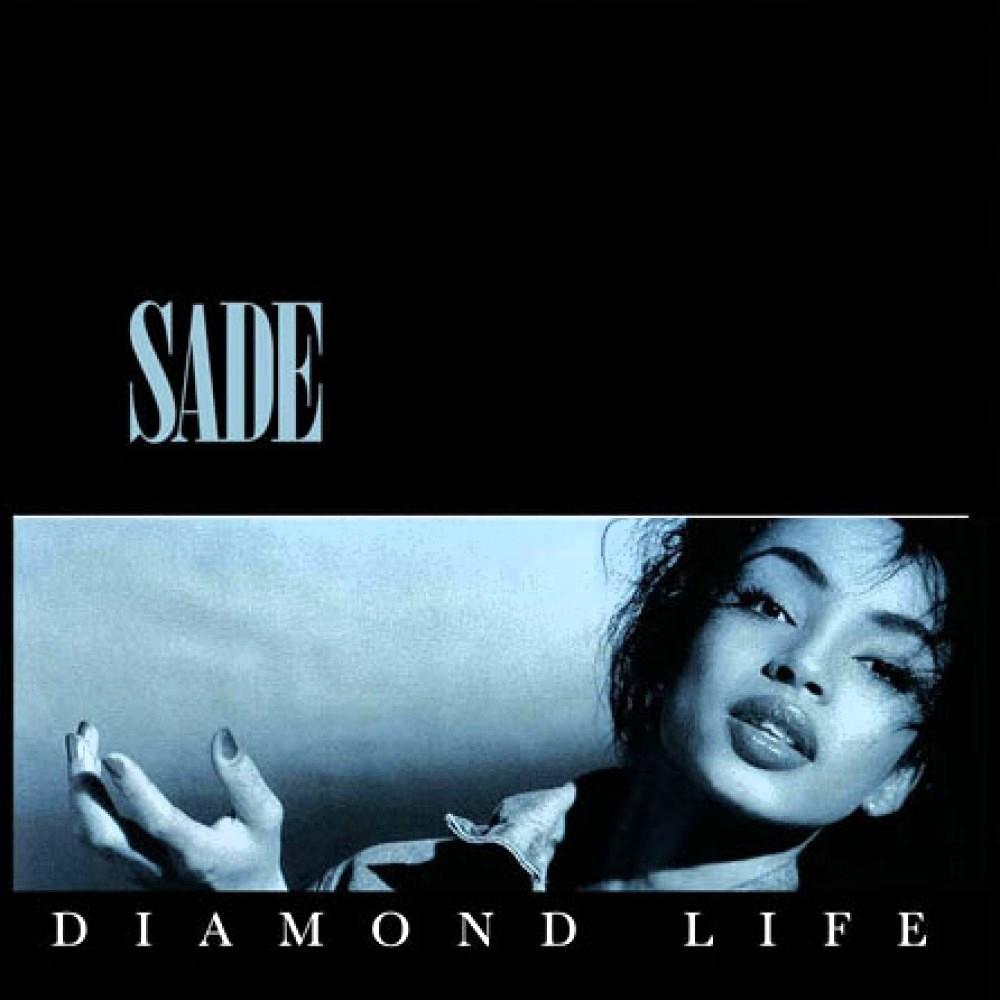

The cover of Sade's Diamond Life makes an immediate impression without asking for much attention. A close portrait of Sade Adu fills the sleeve, establishing a sense of poise and intimacy before the music begins. There is no elaborate scene to decode. The face is the focal point, and the image leaves the listener to discover the emotions beneath that composed surface.
Released in Britain in 1984, Diamond Life was the debut album by Sade, the band named for its singer. Adu's presence defines the sleeve, but the music was a collaboration with saxophonist and guitarist Stuart Matthewman, bassist Paul Denman and keyboardist Andrew Hale. That distinction is easy to miss: the photograph introduces a singular personality, while the record reveals a group whose sound depends on the space each musician leaves for the others.
The album arrived with a sound that drew on soul, jazz and pop without settling comfortably into any one of them. Your Love Is King is warm and direct, while Hang On to Your Love has a more insistent pulse. Smooth Operator sketches a charming but elusive character moving through a world of glamour and emotional distance. Even at its most polished, the music has an undercurrent of uncertainty.
The portrait on the sleeve works in much the same way. Its restraint suggests confidence, but it does not tell the viewer what Adu is thinking. There is a distance between the public image and the more complicated feelings in the songs. The connection is part of the cover's appeal: it creates an atmosphere rather than illustrating a particular lyric.
That approach also helped distinguish Diamond Life from the busier visual language of much mid-1980s pop. The cover does not rely on theatrical costumes, dramatic effects or a crowded arrangement. Instead, the framing and expression do the work. It is an image that remains recognizable even when reduced to the small square of a streaming-service thumbnail.
The sleeve also reveals how readily a band's identity can become concentrated in a single person. Sade Adu was already the unmistakable visual center of the group, but Diamond Life is not a solo record. Its interplay of voice, bass, keyboards, guitar and saxophone is essential to the music's character. The cover captures the group's public identity without showing the full collaboration behind it.
Diamond Life became an international breakthrough, and its sleeve remains closely tied to the sound of the record. The portrait offers no grand explanation of the songs, and that is precisely its strength. It establishes a mood of elegance and reserve, leaving the music to reveal the longing, tension and vulnerability beneath.