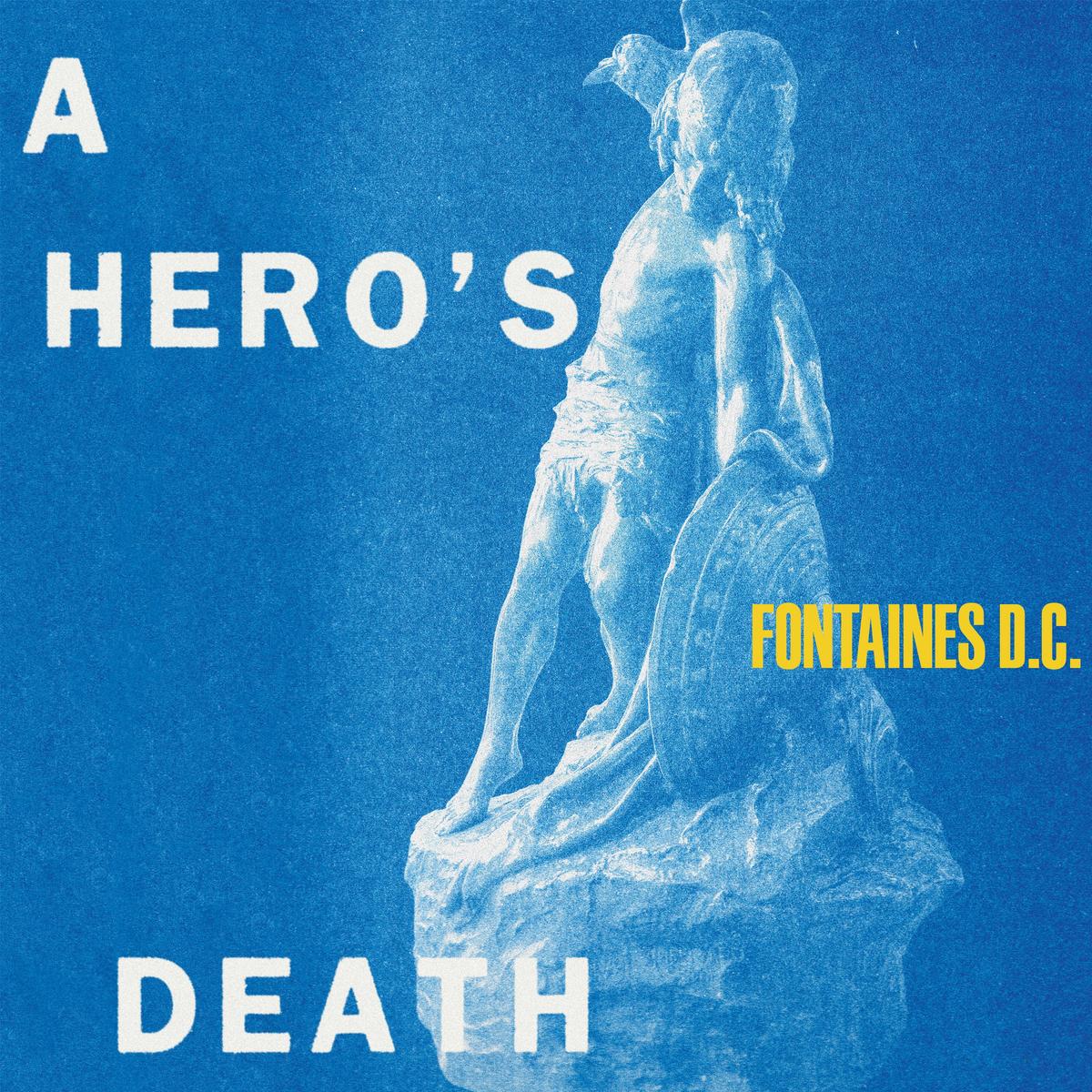




The figure on the cover of Fontaines D.C.'s A Hero's Death is already dying. His body is bound to a standing stone, his head lowered, yet he has not fallen. The image comes from Oliver Sheppard's sculpture The Death of Cúchulainn, a work that carries two histories at once: the ancient Irish legend of a warrior who refuses to collapse and the modern story of a country that adopted his image as a symbol of sacrifice.
That history makes the sleeve a remarkably charged choice for a band's second album. After the acclaim surrounding Dogrel in 2019, Fontaines D.C. could have followed the familiar route of placing themselves at the center of the picture. Instead, they turned to an Irish monument and presented it in an electric blue that feels both historic and strangely contemporary. The figure is a hero, but the first thing we see is his exhaustion.
In the legend, Cú Chulainn ties himself to a stone so that he can remain upright even in death. Sheppard's sculpture makes that final act physical: the tension between the warrior's failing body and his determination to stand is visible in the pose. The sculpture was installed in Dublin's General Post Office in 1934 as a memorial to the Easter Rising of 1916. Its location matters. The GPO was one of the central sites of the rebellion, and the statue became entangled with the public memory of Irish independence.
On the album sleeve, the sculpture is transformed again. Art director Charlie Drinkwater worked with the band on the visual presentation, which used blue risograph printing on recycled coffee-cup paper stock for a physical edition. The printing method and paper give the image a rough material presence, quite different from the polished surface of a conventional promotional portrait. That detail is easier to appreciate on the object itself than in a small streaming thumbnail.
The blue also changes how the sculpture is encountered. It separates the figure from the familiar setting of a civic monument and allows its contours to become the focus. What remains is an almost unbearable mixture of endurance and vulnerability. The artwork does not need to tell us whether the hero's last stand is triumphant, tragic or both. Its strength lies in keeping those possibilities together.
A Hero's Death arrived on 31 July 2020, barely more than a year after the band's debut. Dogrel had captured a restless, outward-looking Dublin through urgent guitar music and vividly local language. Its successor sounds more inward and more burdened. Repetition, tension and space take on greater importance, while Grian Chatten's lyrics return to uncertainty, alienation and the difficulty of maintaining a sense of self under pressure.
The title song is a particularly striking companion to the sleeve. Its repeated affirmations can be heard as an attempt to keep oneself upright by sheer insistence. Other tracks, including I Don't Belong and Oh Such a Spring, approach that unease from different directions. The record is not a retelling of Cú Chulainn's story, and the cover should not be mistaken for a literal illustration of the lyrics. But the connection between an exhausted hero and a band confronting the cost of sudden acclaim is compelling.
There is another tension in using a national monument for an alternative-rock record. Images of heroic sacrifice can be made to sound simple, especially when removed from their historical context. Fontaines D.C. chose a figure whose posture resists simplicity: a warrior who is both defiant and defeated. The cover invites us to consider what happens when the language of heroism meets the reality of human limits.
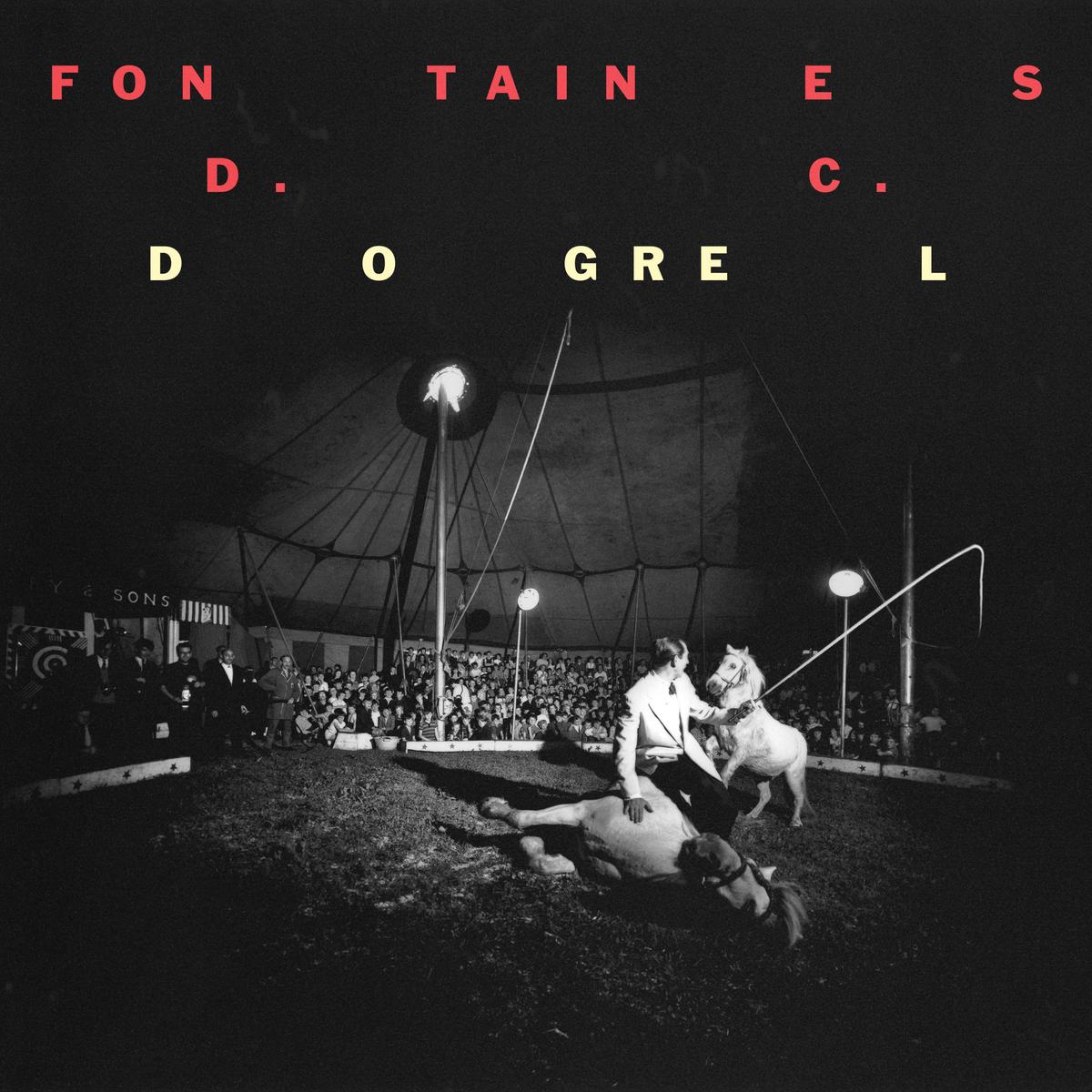
The sleeve also belongs to the band's developing relationship with Irish visual culture. Dogrel had used Bruce Davidson's photograph of an Irish circus performer; A Hero's Death reached further back, to a sculpture with an established place in national memory. Skinty Fia would later use the unsettling image of a deer in a red-lit interior to explore belonging and displacement. Seen together, these covers suggest an ongoing interest in what Irish images can mean when they are taken out of their original settings.
A Hero's Death is memorable because it is not simply an impressive image attached to a good record. It is a meeting between mythology, public sculpture, print design and the private anxieties of a young band. The hero remains standing, but the sleeve refuses to pretend that standing is easy.