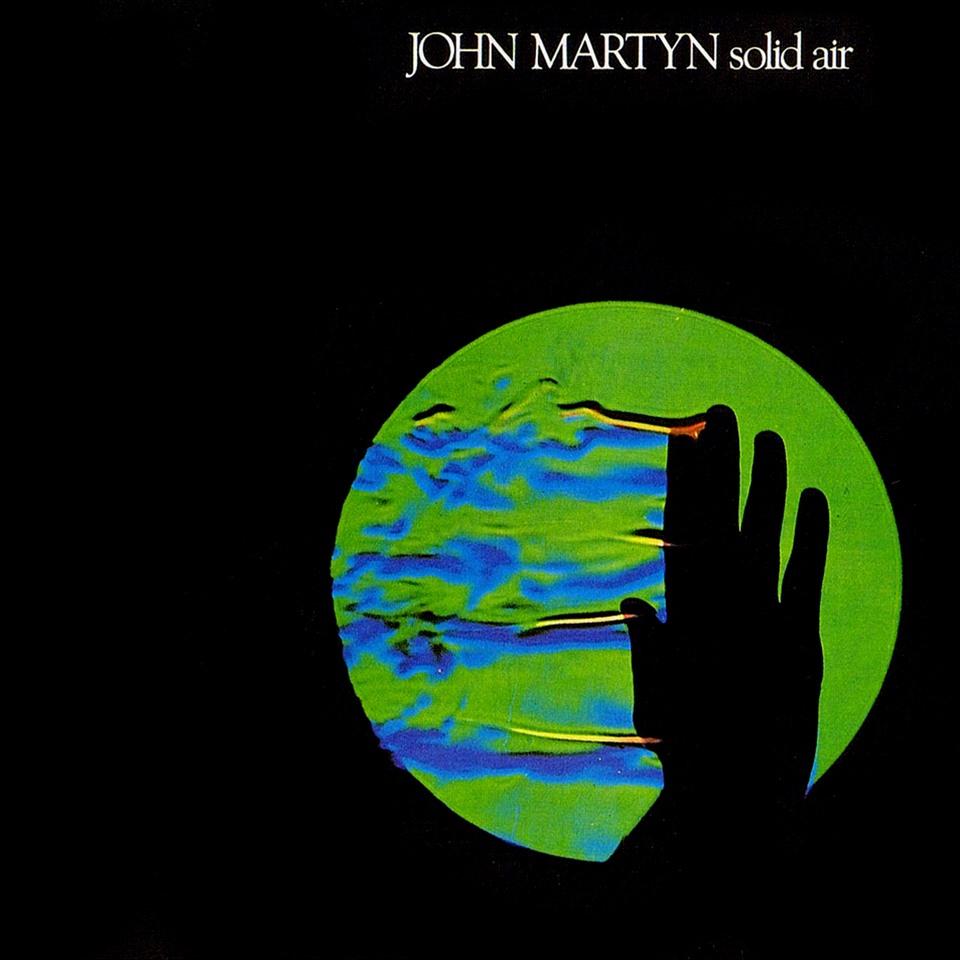

How do you photograph air? On the sleeve of John Martyn's Solid Air, photographer John Webster offered an unexpectedly literal answer. The dark field and shimmering, fluid-looking forms were made using schlieren photography, a technique that makes changes in the density of air visible. What might look like an abstract, otherworldly image is rooted in a physical phenomenon.
The album appeared on Island Records in February 1973, and its gatefold sleeve was designed by Fabio Nicoli. Webster made the front-cover image; Brian Cooke supplied photographs for the inside and back. Those credits matter because the image is not simply a psychedelic illustration: it connects the album's title to a particular way of seeing the invisible.
Martyn's music makes the choice feel inevitable. His acoustic guitar, electric effects and unusually elastic singing create a sound that is difficult to pin down. Danny Thompson's double bass often moves around Martyn's guitar like another voice. The title song, written with his friend Nick Drake in mind, is tender and deeply unsettled, its emotional weight carried as much by atmosphere as by words.
Elsewhere, May You Never offers a more direct warmth, while I'd Rather Be the Devil stretches blues material into something restless and strange. The musicianship is sophisticated without becoming showy. Jazz, folk and blues are all present, but none completely describes the record.
The sleeve does not need a portrait of Martyn to tell us what kind of experience awaits. Its visual subject is something that surrounds us but normally escapes sight. That is a fitting introduction to an album whose most powerful qualities are often felt before they can be explained.
More than half a century later, Solid Air remains a striking meeting of sound and image: a record named for something impossible, wrapped in a photograph that makes the impossible briefly visible.