Johnny Cash

4 album covers in our archive

Johnny Cash's album covers in this archive span 45 years and three very different ways of presenting the same artist: the bold two-color guitar graphic of his 1957 Sun debut, Jim Marshall's close documentary portrait from Folsom Prison in 1968, and the severe black-and-white image of Cash near the end of his life on American IV: The Man Comes Around. Read together, they trace a move from record-label graphics to reportage to an almost icon-like late-career portrait.

Cover evolution

Johnny Cash · 19572002

  1. 1957
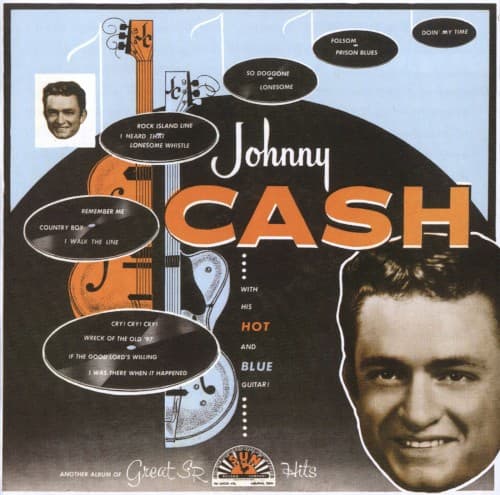
    Johnny Cash with His Hot and Blue Guitar! by Johnny Cash — 1957
    Johnny Cash with His Hot and Blue Guitar!
  2. 1968
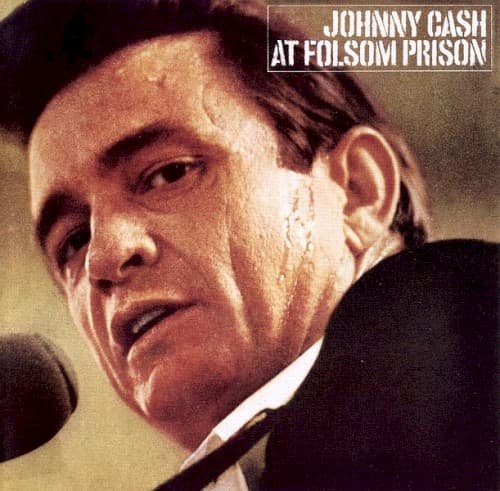
    At Folsom Prison by Johnny Cash — 1968
    At Folsom Prison
  3. 1969
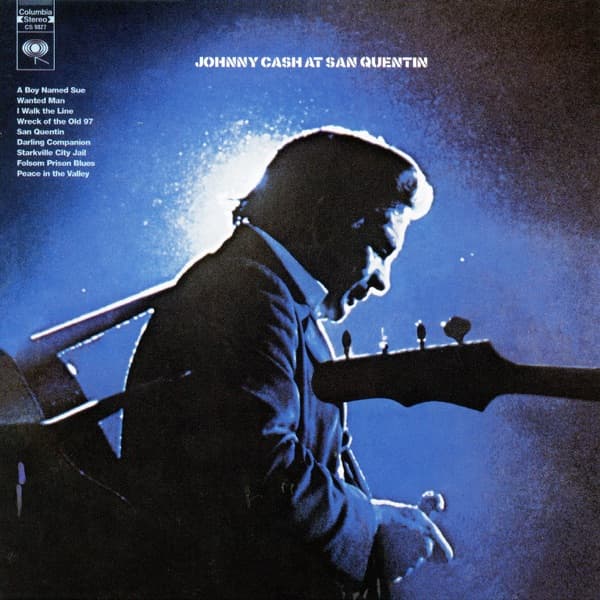
    At San Quentin by Johnny Cash — 1969
    At San Quentin
  4. 2002
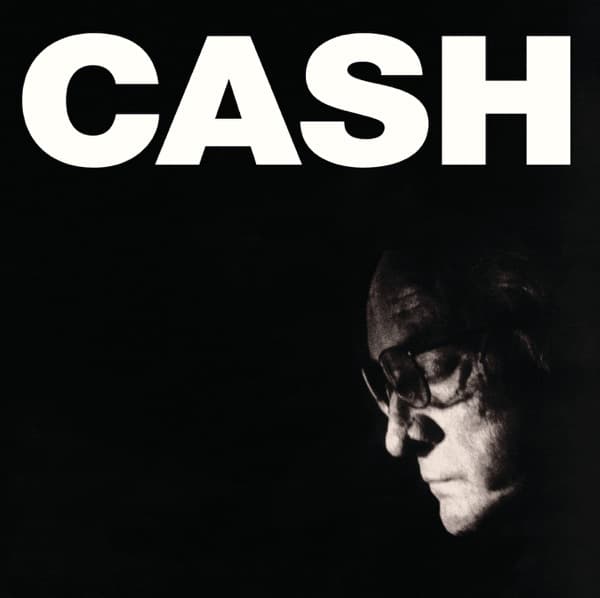
    American IV: The Man Comes Around by Johnny Cash — 2002
    American IV: The Man Comes Around

Visual history

How Johnny Cash's album covers evolved

Johnny Cash with His Hot and Blue Guitar! begins with the visual language of a 1950s label debut: a light-blue field, oversized lettering and a guitar split between hot orange and blue. Sun Records identifies the album as Cash's debut and the first LP Sam Phillips issued on the label, so the sleeve belongs to the moment when Cash was still being introduced as a new recording artist.

By At Folsom Prison, the graphics give way to a face. Jim Marshall photographed Cash at the January 13, 1968 prison concert, where he was the only official photographer with access to the day. American IV makes the portrait even more reduced: Cash emerges from darkness beneath stark white lettering, photographed by Martyn Atkins and designed by Christine Cano. The three covers become progressively less decorative and more dependent on Cash himself as the image.
From Sun Records graphics to prison reportage

The 1957 Sun sleeve sells the record through type, color and the instrument named in the title. Cash is present through his name and guitar rather than through the kind of dominant portrait that would define later releases. Original US copies used the light-blue background with orange-and-blue guitar treatment; later pressings changed the palette, which is why different versions can look noticeably different.

At Folsom Prison reverses that logic. Marshall's photograph was made while documenting the actual concert, not in a separate glamour session, and the tight crop leaves almost nothing except Cash's face, shadow and the small title block. The cover's authority comes from proximity to the event the record preserves.

The late-career portrait stripped to essentials

American IV: The Man Comes Around arrives more than three decades after Folsom and reduces the visual vocabulary again. The cover is monochrome, most of Cash's face disappears into black, and the large white CASH lettering does nearly all of the graphic work around Martyn Atkins's photograph.

That restraint makes the comparison with the 1957 debut especially useful. The early sleeve needs bright color and a named instrument to introduce Johnny Cash; the 2002 sleeve can remove almost everything except part of his face and four letters. By then, the silhouette, age and name are enough to carry the cover.

Questions about Johnny Cash's album covers

Who photographed the At Folsom Prison album cover?

Jim Marshall photographed Johnny Cash at Folsom State Prison on January 13, 1968. The Jim Marshall archive says Cash personally requested him and that Marshall was the only official photographer present, with unusually broad access to the prison concert.

Read the cover story →

What is on the Johnny Cash with His Hot and Blue Guitar cover?

The original US Sun Records sleeve uses a light-blue background with oversized lettering and a guitar divided between orange and blue, turning the album title itself into the central visual idea.

Read the cover story →

Who made the American IV: The Man Comes Around cover?

Behind the Covers credits Christine Cano with the design and Martyn Atkins with the photography. The finished sleeve uses an austere monochrome close-up of Cash emerging from darkness beneath large white CASH lettering.

Read the cover story →

How did Johnny Cash's album-cover style change over time?

Across the three covers documented here, the presentation moves from colorful 1950s label graphics to a documentary concert photograph and finally to a stripped-down late-career portrait. The later sleeves rely increasingly on Cash's face and name rather than illustrative decoration.

American IV: The Man Comes Around by Johnny Cash — album cover art

American IV: The Man Comes Around (2002)

Half a face rises out of darkness beneath four towering white letters: CASH. It was the last album Johnny Cash released while alive, a record haunted by failing sight and closing time, its cover as stripped-down as the music inside.

Label
American Recordings
Designer
Christine Cano
Photographer
Martyn Atkins
Genre
Country, Folk
Decade
2000s
Read the full story →
At San Quentin by Johnny Cash — album cover art

At San Quentin (1969)

Johnny Cash in a wash of blue light, photographed by Jim Marshall inside San Quentin prison in 1969. The same night, the same photographer captured Cash's raised middle finger. This is the calmer frame from that volatile evening.

Label
Columbia
Photographer
Jim Marshall
Genre
Country, Rock
Decade
1960s
Read the full story →
At Folsom Prison by Johnny Cash — album cover art

At Folsom Prison (1968)

The stark close-up of Cash's intense gaze captured the raw authenticity of his legendary prison performance. Jim Marshall was the only official photographer present at the historic January 13, 1968 concert.

Label
Columbia Records
Designer
Howard Fritzson
Photographer
Jim Marshall
Genre
Country
Decade
1960s
Read the full story →
Johnny Cash with His Hot and Blue Guitar! by Johnny Cash — album cover art

Johnny Cash with His Hot and Blue Guitar! (1957)

The groundbreaking debut album from Johnny Cash marked the first LP ever released on Sam Phillips' legendary Sun Records label, featuring classic tracks like 'I Walk the Line' and 'Folsom Prison Blues' with an iconic cover design that helped establish the visual identity of rock and roll's birthplace.

Label
Sun Records
Genre
Country
Decade
1950s
Read the full story →

Browse related design themes

More album cover stories from the 2000s