Peter Saville
The art director who gave Factory Records its cold, classical look
Peter Saville (b. 1955, Manchester) is the graphic designer who, more than anyone, gave British post-punk its visual language. In 1978 he became the founding art director of Factory Records — the Manchester label co-run by Tony Wilson — and over the next decade turned record sleeves into exercises in fine-art restraint, borrowing from classical painting, modernist typography and industrial signage rather than rock iconography.
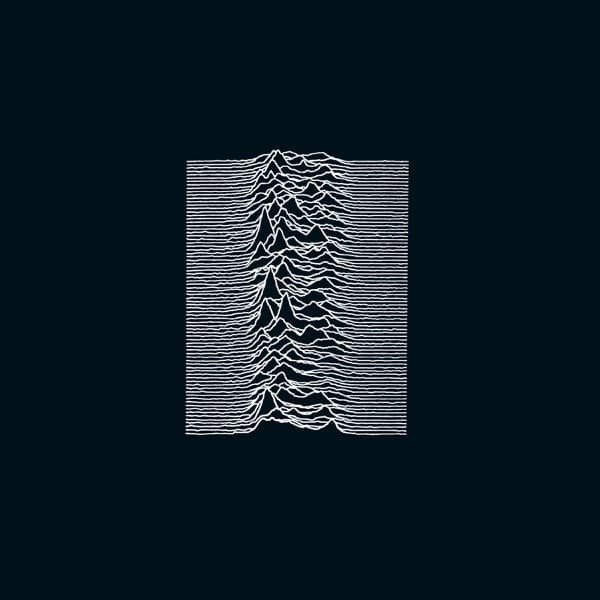
His defining move was to leave the band's name and album title off the cover entirely. Joy Division's Unknown Pleasures (1979) carries no text at all on its front — only a stack of white radio-wave lines on black. That refusal to sell, to explain, to shout, became the house style of Factory and a template copied ever since.
Saville went on to art-direct for New Order, Peter Gabriel and many others, and was later appointed creative director for the city of Manchester itself. His work sits in major design collections, and the Unknown Pleasures image has arguably become the most reproduced graphic in music.
- Born
- 1955, Manchester, England
- Role
- Graphic designer & art director
- Known for
- Factory Records, Joy Division, New Order
- Active
- 1978 – present
Signature style
Saville's covers are cool, literate and often wordless. He treats the sleeve as a gallery frame: a found scientific diagram, a 19th-century flower painting, a colour code borrowed from industrial design — presented with immaculate typography and almost no promotional information. The tension between classical beauty and clinical detachment is the Saville signature.
Defining covers
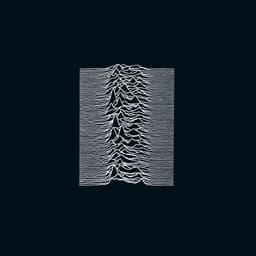
Unknown Pleasures
Joy Division · 1979
The pulsar radio-wave plot — the stacked signal of the star CP 1919, lifted from The Cambridge Encyclopaedia of Astronomy — printed white-on-black with no title or band name. The most imitated album graphic of its era.
Read the full story →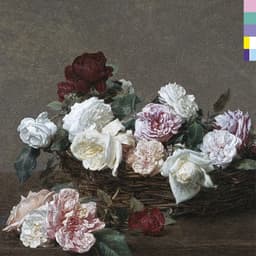
Power, Corruption & Lies
New Order · 1983
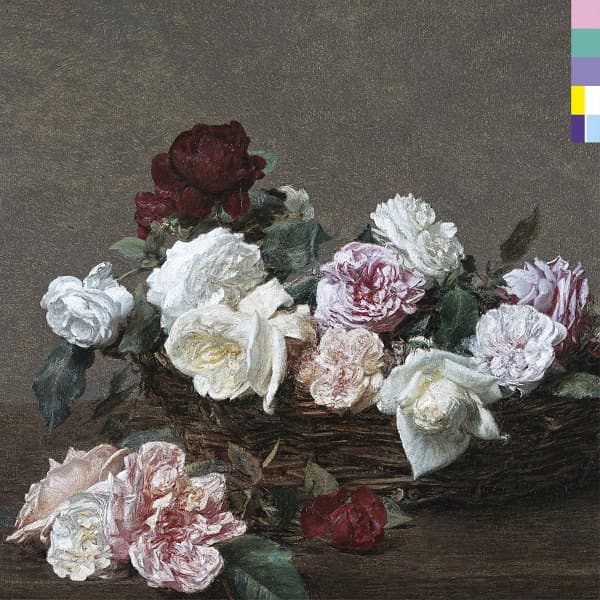
Saville paired a Henri Fantin-Latour flower painting (“A Basket of Roses,” 1890) with a colour-coded alphabet wheel — a private key that let fans “decode” the design. Fine-art surface, cryptographic underneath.
Read the full story →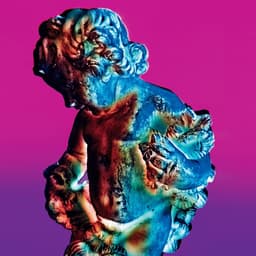
Technique
New Order · 1989
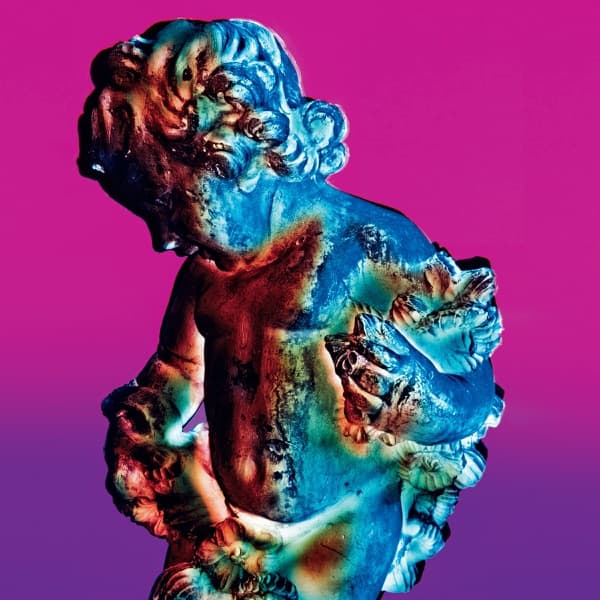
New Order's Ibiza-influenced Technique, wrapped in a photographed stone cherub — classical sculpture recast for the acid-house era.
Read the full story →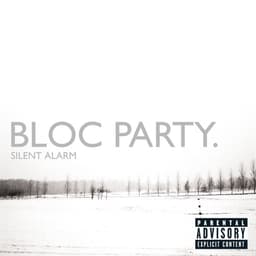
Silent Alarm
Bloc Party · 2005
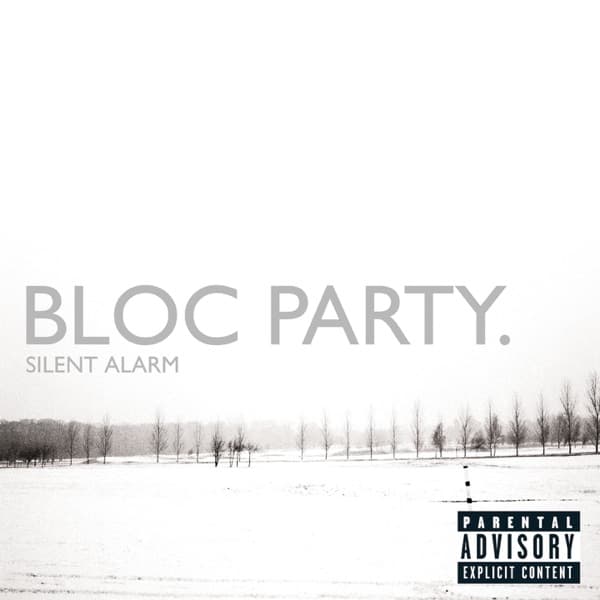
Two decades on, Bloc Party's debut showed Saville's restraint applied to the 2000s — cold, abstract, unmistakably from the same hand.
Read the full story →
Cover evolution
Peter Saville · 1979–2005
Every Peter Saville cover in the archive
Frequently asked
- What is Peter Saville best known for?
- The wordless cover of Joy Division's Unknown Pleasures (1979) — a white pulsar diagram on black — and his role as art director of Factory Records, where he defined the look of Manchester post-punk.
- Did Peter Saville design New Order's covers?
- He designed most of their most famous ones, including Power, Corruption & Lies (1983) and Technique (1989), continuing the text-light, fine-art approach he developed at Factory.
- What is the Unknown Pleasures image?
- A plot of radio pulses from the pulsar CP 1919, taken from The Cambridge Encyclopaedia of Astronomy. Saville reversed it to white-on-black and stripped away all text.