Gus Van Sant had just directed My Own Private Idaho when Red Hot Chili Peppers commissioned him to create their Blood Sugar Sex Magik cover in 1991. The renowned filmmaker was an unexpected choice for album artwork, but his connection to the band came through Flea, who had starred alongside River Phoenix in Van Sant's film.
The concept originated from the band's desire to showcase their extensive tattoo collection while creating something that would represent their first major-label release for Warner Bros. Records. The rose motif was either a callback to their previous album Mother's Milk or possibly an allusion to their track "Apache Rose Peacock."
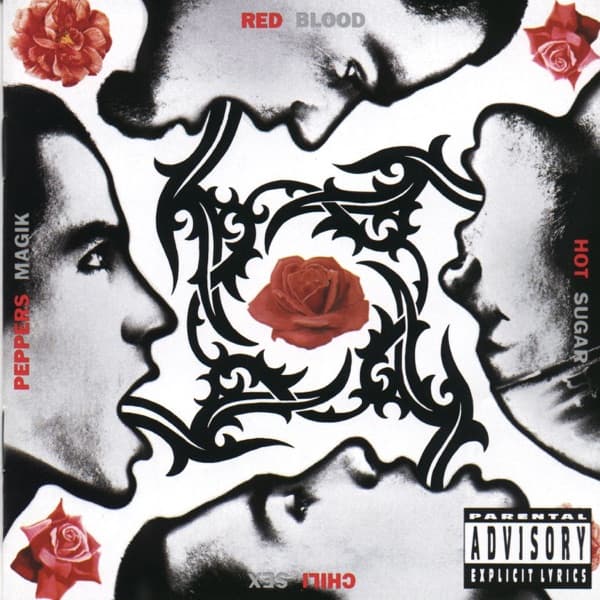
Van Sant photographed each band member individually for the cover shoot. The original 8x10 photographs captured Flea, Anthony Kiedis, Chad Smith, and John Frusciante in stark black and white portraits that would become the foundation for the final design.
The execution required collaboration between Van Sant and Dutch tattoo artist Henk Schiffmacher, known professionally as Hanky Panky. Schiffmacher was already connected to the band, having tattooed many of the elaborate pieces visible on their bodies, including Kiedis's Native American thunderbird back piece.
Van Sant handled all photography, paintings, and art direction for the album, while Schiffmacher specifically created what the album credits call the "tongue illustration." Some sources credit Schiffmacher as "Henky Penky" in the liner notes, reflecting the playful spelling variations of his nickname.
The final cover features the four band members' faces positioned around a single red rose, with thorny black and white vines extending from their open mouths and converging on the central flower. The design successfully merged the tribal tattoo aesthetic Schiffmacher was known for with Van Sant's cinematic portrait style.
No major controversies surrounded the cover, though the album's sexual themes and explicit track titles like "Suck My Kiss" pushed boundaries. The cover was relatively tame compared to the band's previous album artwork, focusing more on artistic symbolism than shock value.
The visual composition employs stark contrast between the black line work and white background, with the red rose serving as the sole color element. The typography is minimal, allowing Schiffmacher's tribal-style artwork to dominate the visual space.
The album booklet expanded on the cover's tattoo theme, featuring collages of the band members' various tattoos, individual portraits by Van Sant, and two group photographs. Kiedis hand-wrote the lyrics in white lettering across black backgrounds, adding a personal touch to the package.
The cover became influential in merging tattoo culture with mainstream rock aesthetics, arguably contributing to the 1990s tattoo boom. Publications have noted that the band helped popularize Chinese symbols and tribal imagery among rock fans who previously favored more traditional heavy metal iconography.
The design perfectly captured the cultural moment when alternative rock was breaking into the mainstream. Released the same day as Nirvana's Nevermind, the cover stood as a visual representation of the alternative explosion while maintaining the Red Hot Chili Peppers' unique funk-rock identity.
Van Sant's contribution extended beyond the cover art – he also directed the video for "Under the Bridge," which won MTV VMA awards for Breakthrough Video and Viewer's Choice Best Video. This dual role cemented the artistic relationship between the filmmaker and the band during their breakthrough period.