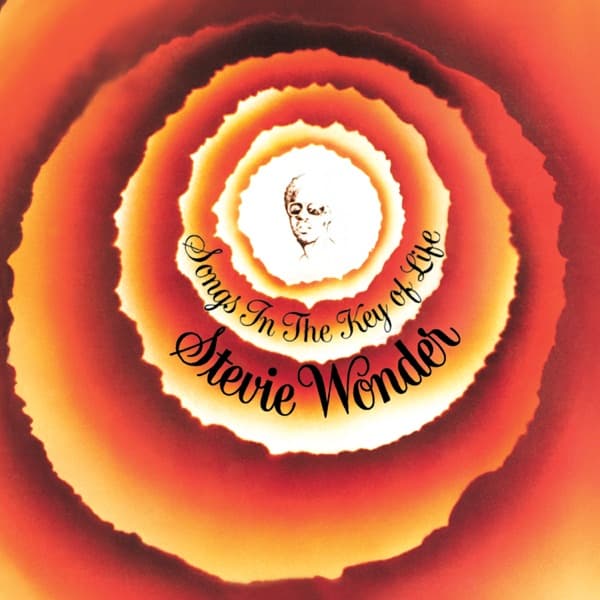
Stevie Wonder's Songs in the Key of Life arrived in 1976 with packaging as ambitious as its musical contents — a gatefold double album wrapped in mystical symbolism and Afrocentric design that would become one of Motown's most visually striking releases. The cover featured Wonder himself photographed in profile, surrounded by elaborate decorative borders that seemed to pulse with spiritual energy.
The concept emerged from Wonder's desire to create visual art that matched his album's themes of life, love, and universal harmony. He wanted the packaging to feel like opening a sacred text or manuscript, something that would reward close examination and repeated viewing. The result was a cover that functioned as both portrait and mandala, drawing viewers into its intricate details.
The main image shows Wonder in a contemplative pose, his distinctive braided hair and gentle expression captured in warm, golden tones. His hands are positioned as if playing an invisible keyboard, emphasizing his role as a musical conduit. The photography creates an almost ethereal quality, as if Wonder is channeling divine inspiration.
The most striking element is the elaborate border design that frames the central portrait. These decorative patterns draw heavily from African textile traditions and Islamic geometric art, creating a visual rhythm that echoes the album's musical complexity. The borders contain symbolic elements including musical notes, celestial bodies, and organic forms that suggest growth and creativity.
The typography integrates seamlessly with the decorative scheme, using flowing letterforms that complement rather than compete with the intricate artwork. The album title appears in elegant script that feels hand-drawn, while Wonder's name maintains a more classical approach. Every text element seems carefully positioned to maintain the cover's meditative balance.
The gatefold interior continues the visual journey with additional artwork and comprehensive liner notes. The inner spread features more symbolic imagery and provides space for the extensive credits required by this ambitious project. The packaging transforms the act of playing the record into a ritualistic experience.
Upon release, the cover's spiritual and Afrocentric imagery resonated powerfully with audiences during the height of the Black consciousness movement. Music critics praised how the visual presentation elevated the album's status from mere entertainment to artistic statement. The cover helped establish Songs in the Key of Life as a complete artistic vision.
The artwork's success influenced other R&B and soul artists to invest more heavily in album packaging as artistic expression. Its integration of African design elements into mainstream American album art opened doors for more culturally diverse visual approaches in popular music. The cover demonstrated that complex, symbolic artwork could enhance rather than distract from musical content.
Today, Songs in the Key of Life remains a high-water mark for album packaging in the vinyl era. Its influence can be seen in contemporary artists who use their album covers as canvases for cultural and spiritual expression. The cover's ability to create a complete sensory experience around Wonder's music continues to inspire musicians and designers alike.
The original vinyl pressing required special attention to reproduce the cover's intricate details and color gradations. The printing process involved multiple color separations to capture the subtle tonal variations in both the photography and decorative elements, making each copy a small work of art in itself.