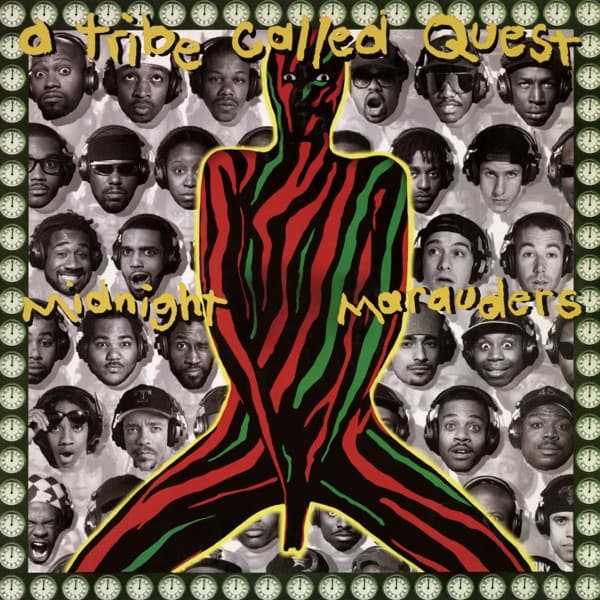


The Midnight Marauders cover contains one of hip-hop's greatest Easter egg hunts: over 70 faces of rap legends, producers, and scene figures meticulously illustrated and hidden within a sea of burgundy silhouettes. What appears at first glance to be a simple crowd scene reveals itself as a who's who of early '90s hip-hop royalty, from De La Soul and Black Sheep to Biz Markie and Leaders of the New School.
The concept emerged from A Tribe Called Quest's desire to celebrate their extended hip-hop family and the Native Tongues collective that had nurtured their career. Q-Tip, Phife Dawg, and Ali Shaheed Muhammad wanted to create something that reflected the communal spirit of hip-hop culture, where artists supported and elevated each other rather than simply competing.
The execution required painstaking attention to detail, with each face carefully rendered to be recognizable yet integrated into the overall composition. The illustration style deliberately evoked concert posters and underground comix, giving the cover a grassroots authenticity that matched the group's aesthetic philosophy.
While the specific designer and photographer remain uncredited in official releases, the artwork aligned perfectly with Tribe's collaborative approach to creativity. The group was known for working closely with their visual collaborators, ensuring every design element reflected their artistic vision and cultural values.
Fans immediately embraced the cover as a treasure hunt, spending hours identifying faces and debating obscure figures in the crowd. Hip-hop magazines ran features trying to name every person, turning the album cover into interactive entertainment that extended far beyond the music itself.
The burgundy color palette became instantly associated with the album, influencing everything from concert merchandise to later hip-hop album designs. The cover established a template for how rap albums could function as cultural documents, capturing entire scenes and movements within a single frame.
The Midnight Marauders artwork influenced countless hip-hop covers that followed, inspiring artists to embed cultural references and community connections directly into their visual presentation. It proved that album covers could serve as historical documents, preserving moments in cultural time with the same care as museum exhibitions.
Decades later, the cover remains a masterclass in community representation, showing how thoughtful design can transform a simple group portrait into a celebration of an entire cultural movement.