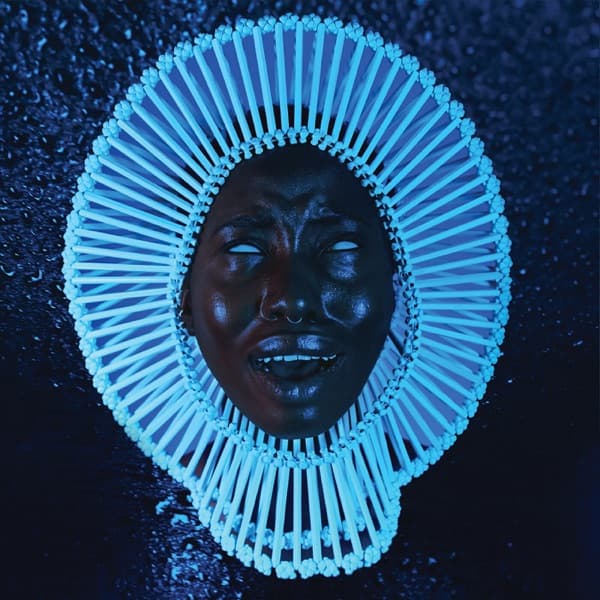

Ibra Ake shot the cover for "Awaken, My Love!" on a single polaroid, creating what would become one of the most deceptively simple yet powerful album covers of the 2010s. The intimate, almost accidental-looking photograph captures Donald Glover in a moment of vulnerability that perfectly mirrors the album's deeply personal exploration of funk, soul, and black identity.
The concept emerged from Glover's desire to strip away the polished veneer of typical album artwork. He wanted something that felt immediate and raw, matching the organic, analog sound he was pursuing with the music. The polaroid format wasn't a stylistic choice but a philosophical one — representing authenticity in an increasingly digital world.
Ake, who had been documenting Glover's creative process for years, understood the assignment intuitively. The photo was taken during a casual moment, not a formal photo shoot. Glover appears caught between expressions, his eyes slightly unfocused, creating an almost dreamlike quality that suggests the "awakening" referenced in the album title.
The lighting in the polaroid creates natural shadows across Glover's face, emphasizing the contemplative mood. Ake didn't manipulate or enhance the image — the slight blur and grain inherent to polaroid film became features, not bugs. The immediacy of instant film meant there was no opportunity for endless retakes or digital perfection.
Ibra Ake had been Glover's go-to visual collaborator since the early days of his music career. As both photographer and creative director, Ake understood how to translate Glover's artistic vision into compelling imagery. Their collaborative relationship meant Ake could capture unguarded moments that felt authentic rather than constructed.
The decision to use this particular polaroid as the album cover was made quickly. Glover and Ake recognized immediately that it captured something essential about the album's themes of self-discovery and artistic evolution. The image suggests someone in the process of transformation — fitting for an artist abandoning hip-hop for 1970s-inspired funk.
When Glassnote Records first saw the cover, some executives worried it was too simple, too informal for such an ambitious musical statement. The lack of stylized graphics, bold typography, or conventional album cover elements made it stand out starkly against contemporary hip-hop and R&B releases. But Glover insisted the simplicity was the point.
Critics and fans immediately grasped the cover's power. The polaroid aesthetic felt both retro and timeless, connecting to the album's 1970s influences while maintaining a contemporary intimacy. Social media amplified the image's impact — the close-cropped face translated perfectly to profile pictures and streaming thumbnails.
The cover influenced a wave of deliberately lo-fi, intimate album artwork across genres. Artists began embracing polaroid photography and unpolished imagery as alternatives to heavily produced album art. Ake's approach demonstrated that powerful album covers could emerge from spontaneous moments rather than elaborate concepts.
The "Awaken, My Love!" cover became iconic not despite its simplicity but because of it. In an era of visual oversaturation, the quiet intensity of Glover's gaze cut through the noise. The polaroid format gave the image a physical quality that felt precious and unique.
Streaming platforms initially struggled with the cover's unconventional dimensions and muted colors, but these apparent limitations became strengths. The image's organic imperfections made it instantly recognizable in any format, from vinyl to digital thumbnails.
The polaroid itself became a collector's item, with Ake occasionally sharing behind-the-scenes shots of the original instant film photograph. The physical artifact represents everything the album stands for — the beauty of analog processes in a digital world, the power of capturing authentic moments, and the magic that happens when artists trust their instincts over market research.