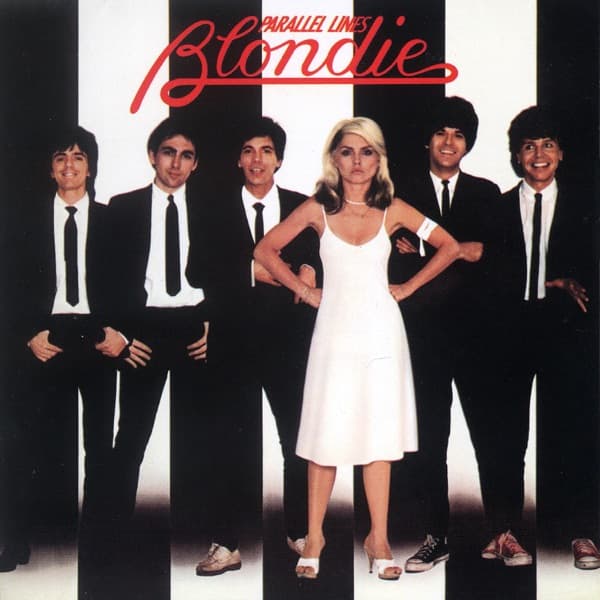

Edo Bertoglio nearly didn't show up to photograph Blondie for what would become one of rock's most recognizable album covers. The Swiss-Italian fashion photographer, known for his work with Interview magazine and close ties to the downtown New York art scene, was initially reluctant to take on another band shoot.
The concept emerged from Debbie Harry's vision of the band as a unified visual statement rather than the typical "lead singer plus backing musicians" approach. She wanted something that would emphasize the group's collective identity while still acknowledging her role as the focal point, inspired by the clean geometric aesthetics she'd absorbed from the New York art world.
Mike Chapman, the album's producer, connected the band with Ramey Communications, a design firm that specialized in creating cohesive visual campaigns for emerging artists. The team proposed a stark, minimalist approach that would stand out against the increasingly elaborate album artwork of the late 1970s.
Bertoglio shot the session in his downtown Manhattan studio, using a seamless white backdrop and carefully controlled lighting to create the impression of infinite space. The band members wore matching white outfits against the white wall, with Harry positioned slightly forward in her now-famous white dress, creating subtle depth through positioning rather than dramatic lighting.
The photographer shot multiple configurations, but the final image emerged from a moment when the band naturally arranged themselves in a line, creating the visual pun that would give the album its title. Bertoglio's fashion photography background showed in his attention to the clothing's texture and the way the fabric caught light.
Ramey Communications handled the typography and layout, choosing a bold sans-serif font that complemented the photograph's modernist aesthetic. The design team deliberately kept text minimal, allowing Bertoglio's striking image to dominate the cover real estate.
Chrysalis Records initially worried the cover was too stark and uncommercial compared to the colorful, busy album artwork dominating record store shelves in 1978. Some executives pushed for adding color or graphic elements, but Harry and the band insisted on maintaining the photograph's minimalist integrity.
The cover's release coincided perfectly with new wave's emergence into mainstream consciousness, and the clean aesthetic became shorthand for the movement's sophisticated approach to pop music. Fashion magazines immediately embraced the image, with several citing it as influence for editorial spreads.
Within months of the album's release, the cover's influence appeared in fashion photography, band promotional materials, and even television commercial aesthetics. The image helped establish the template for how new wave and post-punk bands would present themselves visually throughout the early 1980s.
Music photographers began copying Bertoglio's lighting setup and minimal approach, though few achieved the original's perfect balance of simplicity and sophistication. The cover became a masterclass in how restraint could create more impact than elaborate production.
Bertoglio later admitted he had no idea the photograph would become so iconic, remembering it as simply "a good, clean band shot." The image's enduring power lies in its ability to capture both the moment when punk evolved into new wave and Blondie's unique position as both underground credible and mainstream accessible.