

Whatever People Say I Am, That's What I'm Not
Arctic Monkeys · 2006
2 min read
- Label
- Domino Recording Company
- Decade
- 2000s
- Genre
- IndieRockAlternative
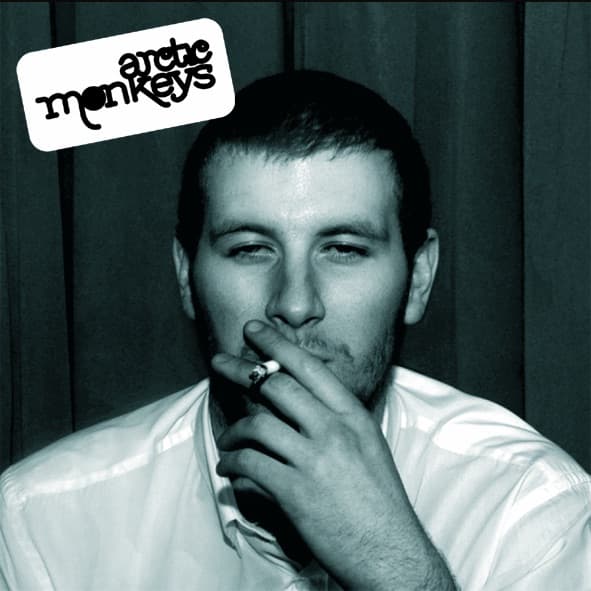
The cover of Whatever People Say I Am, That's What I'm Not features one of the most authentically DIY photographs in indie rock history — a grainy, motion-blurred shot of Chris McClure, a friend of the band, smoking a cigarette in a Sheffield nightclub. The image wasn't commissioned or professionally staged; it was simply a candid moment captured during the band's early club-going days.
The concept emerged from the band's desire to represent their genuine Sheffield nightlife experience rather than create something polished or commercial. Alex Turner and the band wanted artwork that reflected the raw, unfiltered energy of their music and the working-class culture they emerged from.
The photograph captures McClure mid-drag, his face partially obscured by cigarette smoke and motion blur, creating an almost ghostly presence against the dark club backdrop. The low-quality, snapshot aesthetic was entirely intentional — this wasn't about technical perfection but about authentic documentation of their world.
The image's amateur quality perfectly matched the band's grassroots origins, having built their following through file-sharing and word-of-mouth rather than traditional music industry promotion. The cover's DIY aesthetic reflected how they'd distributed their early demos — burned onto CDs and passed around Sheffield.
When the album became the fastest-selling debut in UK history at the time, the unpolished cover art stood in stark contrast to the glossy, manufactured images typically associated with chart-topping albums. McClure became an unlikely icon, his blurred face representing a generation of young British club-goers.
The photograph's authenticity resonated deeply with fans who saw themselves reflected in its unpretentious imagery. Unlike the aspirational lifestyle imagery common in pop and rock, this cover suggested accessibility — these could be your mates in your local nightclub.
The cover influenced a wave of indie bands to embrace similarly lo-fi, documentary-style artwork throughout the late 2000s. Its success proved that authenticity could triumph over commercial polish, inspiring countless bands to reject manufactured imagery in favor of genuine moments.
The artwork's cultural impact extended beyond music into broader discussions about authenticity in digital culture. As social media began encouraging curated, perfect imagery, the Arctic Monkeys cover stood as a reminder of the power of unguarded, imperfect moments.
Years later, McClure remained largely private about his unexpected fame, embodying the unpretentious spirit that made the cover so compelling in the first place.
Get notified when we publish new cover stories. Download the Behind the Covers app and turn on notifications — a new album art deep dive, every day.
Loved the story behind Whatever People Say I Am, That's What I'm Not? Hear the album or add it to your collection.
More by Arctic Monkeys
More Indie Covers
More from the 2000s

Up next
Hybrid Theory
Linkin Park · 2000 · Frank Maddocks
Frank Maddocks collaborated with the band to create this iconic stencil-graffiti soldier with dragonfly wings, inspired by Banksy. Mike Shinoda drew the original soldier illustration, while Maddocks executed the stenciling and added the wings.
Read this story →Want to explore more?
Never miss a new cover story
Get the Behind the Covers app and turn on notifications — we publish new album art deep dives every day.