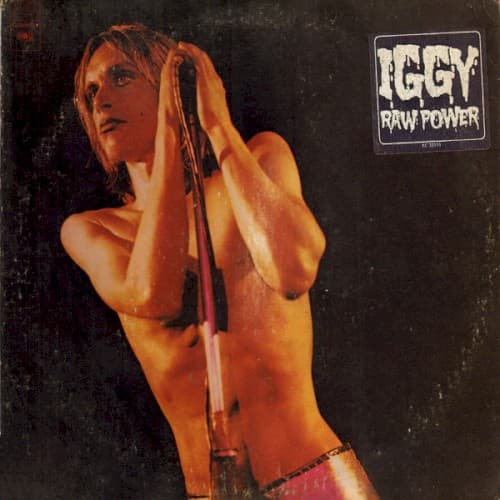
The front is a color live photograph, not a studio portrait, and every choice in it pushes toward immediacy. The frame holds Iggy Pop roughly from head to hips, but the sinewy, bare torso is the true subject, planted dead center so the eye lands on the body first and only afterward travels upward to the raised arms and tilted face. That upward pull is the composition's engine: the hands, lifted to grip the microphone cord, draw a diagonal line that keeps the gaze moving rather than resting.
The tonality is warm and close, all ambers and skin-toned oranges against near-black. This warmth reads as heat and exertion; the figure looks lit from the front while the surrounding stage collapses into darkness. That darkness is doing real work as negative space. With almost the entire right and lower field given over to shadow, the illuminated body becomes the sole event, isolated and enlarged by everything the picture withholds.
The light is dramatic and directional, raking across the chest and abdomen so that each muscle and rib catches a highlight and every hollow falls into shadow. The effect emphasizes leanness and tension, the physique of someone in motion rather than posing. Because the arms are lifted and bent, the pose builds dynamic tension across the upper body, and one hand sits close to the edge of the frame, adding to the sense that the moment was caught rather than arranged.
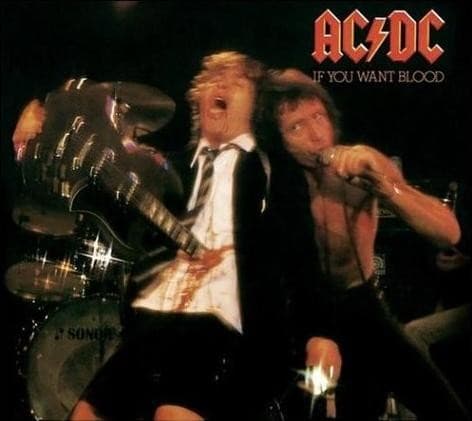
At the top right, a small rectangular logo box carries the name and title in a spiky, horror-style lettering, with a catalog line beneath. It is the one deliberately graphic element, and its placement in the corner leaves the body uncluttered while stamping the image with an identity. The contrast is pointed: a designed label riding on top of an undesigned, sweat-real photograph.
Materiality matters here too. The photograph carries the grain and slightly blown highlights of a live shot, and the sleeve's worn, darkened edges give it the look of something handled and aged. That roughness reads as honesty. The frame does not try to flatter or smooth; it presents the performer as he was on stage.
The cropping is the decisive gesture. By pushing in tight on the torso and letting the background disappear, the image makes the body itself the statement. This is not rock-star glamour but primal intensity, sexuality and aggression fused into one figure. The homoerotic charge of the bare, lit flesh sits right alongside a hard, confrontational masculinity, and the picture refuses to resolve the tension between them.
Read as a whole, the cover works because it matches sound to sight. The stark presentation, the single figure, the contrast of light and void all translate the album's sonic assault into a visual one. The image has the look of something quickly snapped, yet the framing, the lighting, and the focal path reveal careful artistic consideration. Its power comes from directness: strip away decoration, isolate the body in light, and let raw energy be the entire subject.