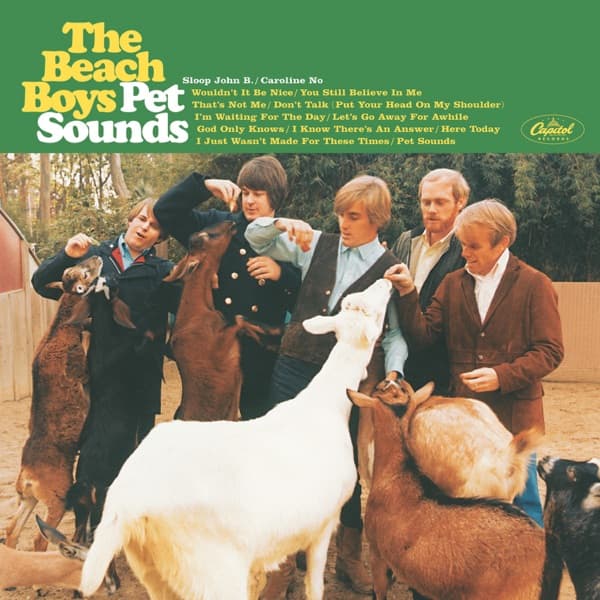
The composition refuses to behave. Your eye lands first not on the band but on that lunging white goat at dead center, front hooves on the rail, horned head tilting up toward an outstretched hand. From there the picture scatters outward: goats jostle and crowd in from every edge of the enclosure, one nibbling at a sleeve, others pressing forward, so the focal path never settles on a face for long. It is a portrait in which the subjects have lost control of the frame.
The five men are arranged in a loose line, all leaning in, hands extended in the shared gesture of feeding. Their smiles read as genuinely surprised rather than posed, the expressions of people caught reacting rather than performing. That accidental candor is what gives the image its documentary charge; nothing here looks staged, because the goats made staging impossible.
Color and tonality lean warm and earthbound. The brown and white of the animals plays against the dirt of the enclosure and the corduroy and blazers of the band, and beyond them the background dissolves into a soft green blur of zoo foliage, pushing the crowded action forward. A single railing and a patch of bare ground are the only architecture, giving the scene its penned-in, improvised feel.
The whole photograph is set inside a warm green border. Top left, The Beach Boys is stacked in fat yellow letters, with Pet Sounds in white beside it, and the Capitol Records logo floats in the upper right. Unusually, every song is already listed across the green band up top, from "Sloop John B" to "God Only Knows" to "Wouldn't It Be Nice," as if the back cover had migrated to the front, an editorial choice that crowds text into the frame the way the goats crowd the men.
What the image means is bound up in that literalism. The title is a pun, and the cover plays it so straight it borders on slapstick, freezing a single afternoon's gag rather than illustrating the music inside. The tension between the two is the reading: an intricate, delicate album announced by a scene of cheerful animal chaos. The picture works precisely because of that mismatch. The eye keeps circling back to the goat, and each pass reveals another small collision at the edges, so the frame reads less as a band portrait than as a snapshot of a concept getting away from everyone in it.