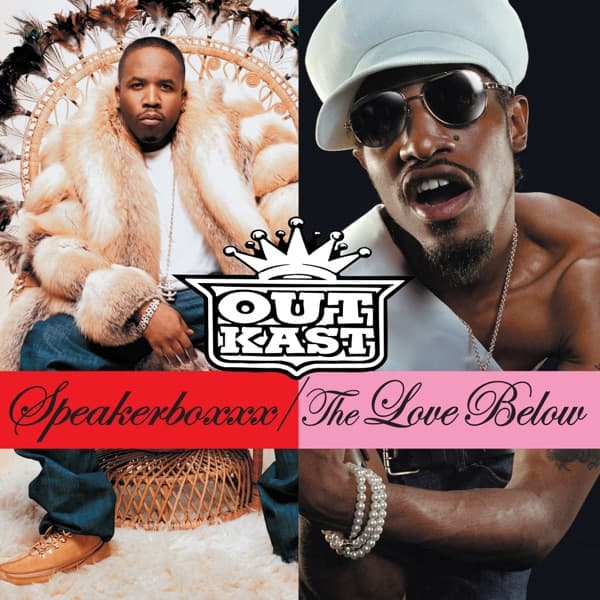



The cover for Speakerboxxx/The Love Below did something unprecedented in hip-hop: it visually announced the creative split between Big Boi and Andre 3000 by literally dividing the album artwork down the middle. The physical CD booklet could be flipped to reveal completely different aesthetic worlds, making it clear this wasn't just a collaboration but two distinct artistic statements.
The concept emerged from the duo's acknowledgment that they were growing in different directions creatively. Big Boi wanted to stay rooted in Southern hip-hop traditions, while Andre 3000 was exploring funk, jazz, and experimental sounds. The visual treatment needed to reflect this fundamental divide while still presenting a cohesive product.
The execution created two distinct visual languages within one package. Big Boi's "Speakerboxxx" side featured darker, more traditional hip-hop imagery with urban landscapes and straightforward photography. The color palette stayed muted and masculine, reflecting the grittier, more conventional rap aesthetic of his half of the project.
Andre 3000's "The Love Below" side exploded with vibrant colors, psychedelic patterns, and fashion-forward imagery. His side featured him in various flamboyant outfits, including his now-iconic blonde wig and colorful suits. The photography embraced surreal, almost Prince-like sensibilities that matched his musical experimentation.
The packaging design required careful coordination to ensure both halves felt complete while maintaining the album's unity. The spine needed to work for both artists, and the internal layout had to accommodate two completely different photo shoots and design approaches. This presented technical challenges for the printing and binding processes.
The label initially worried about the unconventional approach, fearing it might confuse consumers or suggest the group was breaking up. However, the visual honesty about their artistic differences actually strengthened the album's concept. The design telegraphed to fans that they were getting two full albums worth of material, not a compromised middle ground.
Critics and fans immediately grasped the visual metaphor, with many praising the honesty of the presentation. The split design became a talking point in reviews, helping to explain the album's ambitious scope. Hip-hop magazines featured spreads showing both sides of the artwork, emphasizing the dramatic contrast.
The cover's success influenced how other rap duos and groups approached their visual presentation. It proved that hip-hop album covers could be conceptually sophisticated while remaining commercially appealing. The design anticipated the growing acceptance of genre-blending and individual expression within hip-hop culture.
The packaging won several design awards and has been cited by graphic designers as an example of how album covers can enhance rather than simply illustrate musical concepts. Design schools have used it as a case study in how visual presentation can clarify complex artistic statements.
The cover perfectly predicted the album's commercial and critical success, with both halves appealing to different audiences while the unified presentation suggested artistic ambition. Andre 3000's side, in particular, introduced fashion elements that would influence hip-hop's visual culture for years to come.
The original CD booklet has become a collector's item, with fans particularly seeking out copies where the flip mechanism still works properly. The cover's innovative approach to presenting dual artistic visions remains one of the most successful examples of packaging design matching musical ambition in hip-hop history.