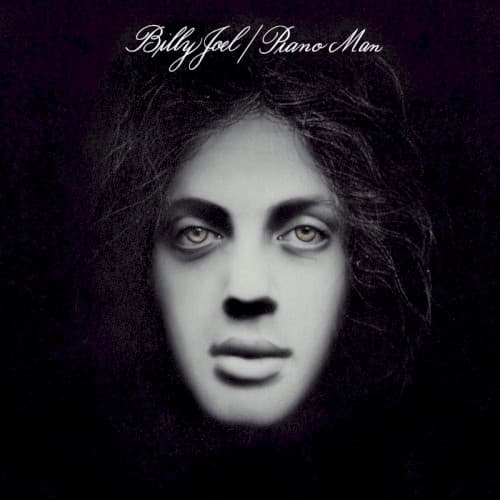
The cover that launched Billy Joel's career into the stratosphere nearly never existed as we know it. What countless fans assumed for decades were manipulated photographic images turned out to be something far more remarkable: hand-painted acrylic masterpieces measuring 15 by 20 inches.
Bill Imhoff, described as one of Columbia Record's go-to guys for album art, created these photorealistic portraits using acrylic paint on heavy board. The artist specialized in photo-realistic portraits that fooled viewers into thinking they were looking at photographs rather than paintings.
The creation process involved Imhoff working from photographic references to craft these hyperrealistic portraits. Using traditional acrylic painting techniques, he built up layers of paint to achieve the photographic quality that made the images so convincing. Each painting took considerable time and skill to execute at this level of realism.
Imhoff worked during Columbia's golden age of album cover art, when the label employed painters, photographers and illustrators to create distinctive visual identities for their releases. This was part of a tradition started by Alex Steinweiss, who invented album cover art at Columbia in the late 1930s.
Beverly Parker handled the overall design of the Piano Man package, working as the album's designer to coordinate the visual elements and typography. The collaboration between Parker's design vision and Imhoff's painted artwork created the final package released on November 14, 1973.
When Piano Man hit record stores, the cryptic cover art immediately caught attention. The close-up portrait of Billy Joel symbolized him being a face in the crowd, fitting the album's themes of anonymity and observation that permeated the title track.
The photorealistic quality of Imhoff's work was so convincing that it took decades for the truth to emerge. Art collector Brian Coppola revealed the paintings' true nature after acquiring them, noting he "always assumed that the front and back covers were manipulated photographic images."
The original paintings followed a remarkable journey after their creation. They were initially gifted to one of Billy Joel's managers as a token of appreciation. Years later, the manager decided to sell these unique pieces of rock history.
Through a series of art dealer transactions and what Coppola described as "great fortune, a bit of luck, and quite a coincidence," both paintings eventually landed in private hands. The collector noted that art dealers with more inventory than cash often make better deals during tax season.
Visually, the cover employs a dramatic close-up composition that draws viewers into Joel's intense gaze. The color palette utilizes muted tones that suggest the smoky, dimly-lit bar atmosphere referenced throughout the album's songs.
Imhoff's technique demonstrated the heights that traditional painting could achieve in an era increasingly dominated by photography. His ability to capture subtle facial expressions and lighting effects through paint alone showcased exceptional artistic skill that elevated album cover art to fine art status.
The Piano Man cover helped establish a visual template for singer-songwriter albums of the 1970s. Its intimate, portrait-based approach influenced countless other album covers that sought to create direct emotional connections with potential listeners.
Today, the original paintings are considered "pure, solid gold grail" pieces by collectors who understand their significance in rock history. Their discovery as paintings rather than photographs added another layer to the Piano Man legend, proving that even the most familiar album covers can still surprise us with hidden stories.