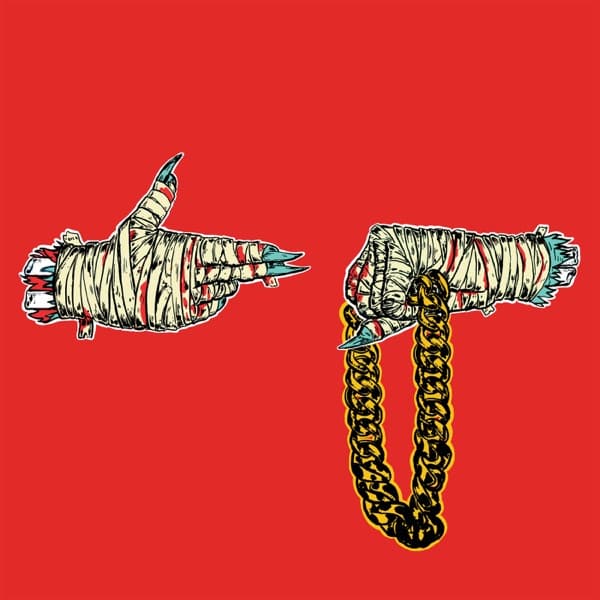

Nick Gazin never expected his hastily sketched logo to become one of the most tattooed images in hip-hop history, but that's exactly what happened when he drew the now-iconic golden fist clutching a chain and gun for Run the Jewels 2. The underground comic artist, known for his work with Vice Magazine, created the symbol that would transcend album artwork to become a global emblem of rebellion.
The concept emerged from Killer Mike and El-P's desire to evolve beyond their debut's simple text-based design. They wanted something that captured their revolutionary spirit and the raw energy of their partnership. Gazin drew inspiration from classic protest imagery, combining the raised fist of resistance movements with the chain and gun motifs that represented both bondage and liberation.
Gazin worked entirely by hand in his Brooklyn apartment, using traditional pen and ink techniques he'd honed through years of underground comic creation. He deliberately avoided digital tools, wanting the logo to have an organic, street-level authenticity that computer graphics couldn't achieve. The slight imperfections and hand-drawn quality became part of its charm and power.
The artist's background in underground comics proved perfect for Run the Jewels' aesthetic. Gazin had spent years creating provocative imagery for counterculture publications, understanding how to distill complex political messages into simple, powerful symbols. His experience with Vice's irreverent visual style aligned perfectly with the duo's anti-establishment stance.
When Gazin presented his initial sketches, the response was immediate and unanimous. El-P and Killer Mike recognized they had something special – not just album artwork, but a brand that could stand alone. The simplicity of the design made it perfect for everything from t-shirts to graffiti stencils.
The golden colorway became crucial to the logo's impact. Gazin chose the metallic gold treatment to suggest both wealth and classical statuary, creating a tension between street-level rebellion and aspirational luxury. This choice elevated the symbol beyond typical hip-hop imagery, giving it an almost heraldic quality.
Fans embraced the logo with unprecedented enthusiasm, turning it into living street art across the globe. Within months of the album's release, the fist and gun appeared as tattoos, murals, and protest signs from Atlanta to Berlin. The symbol transcended its original purpose, becoming a rallying point for various social movements.
The design's success caught even Gazin off guard. He watched his simple sketch become merchandise empires, inspire countless imitations, and appear in contexts he never imagined. The logo's power lay in its ability to communicate rebellion and solidarity without words, crossing language barriers effortlessly.
Record labels began studying the Run the Jewels 2 cover as a masterclass in brand creation. The artwork proved that in the streaming era, a strong visual identity could be more valuable than traditional album art. Gazin's design became a blueprint for creating symbols that work across all media formats.
The cultural impact extended far beyond hip-hop, influencing political movements and protest art worldwide. The raised fist imagery connected to decades of resistance iconography, while the contemporary treatment made it relevant for new generations of activists. Gazin had created something that felt both timeless and urgently modern.
Years later, Gazin still receives photos from fans showing his logo tattooed on their bodies or painted on walls in distant countries. The underground comic artist's quick sketch had become a permanent part of global visual culture, proving that the most powerful symbols often emerge from the most unexpected places.