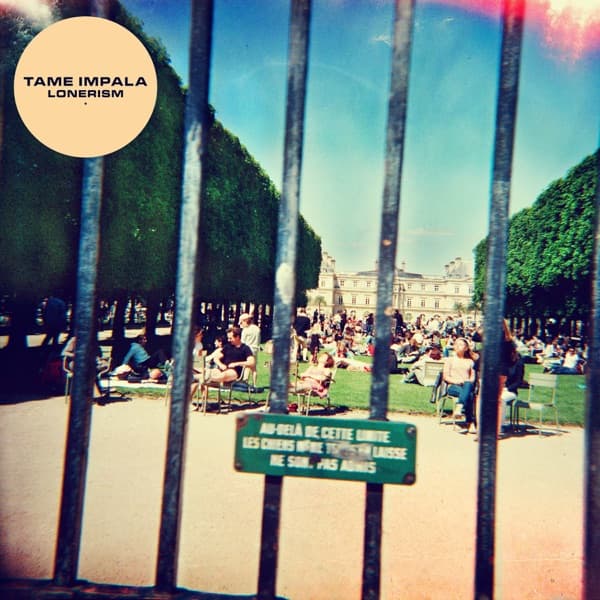
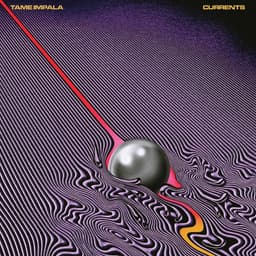
Leif Podhajsky achieved something remarkable with Lonerism: he created album artwork that feels like synesthesia made visible. The cover's mesmerizing spiral of colors wasn't born from complex photography or elaborate studio setups, but from a deceptively simple source — a straightforward photograph of trees that Podhajsky transformed into a portal of pure psychedelic energy.
The concept emerged from Kevin Parker's description of the album's themes. Parker wanted something that captured the feeling of being alone in a crowd, the sensation of retreating inward while the world spins around you. Podhajsky, already known for his digital manipulations of natural imagery, saw an opportunity to visualize this internal turbulence through external chaos.
Podhajsky's approach was methodical yet intuitive. He started with his signature technique of photographing natural elements — in this case, a canopy of trees viewed from below. The original image was unremarkable, almost mundane, showing branches and leaves against sky in typical earth tones.
The magic happened in post-production, where Podhajsky employed a combination of digital mirroring, color shifting, and radial distortion. He created the spiral effect by duplicating and rotating sections of the image, then applied vibrant color overlays that transformed greens and browns into electric blues, magentas, and yellows. The process took weeks of fine-tuning to achieve the perfect balance between recognizable organic forms and complete abstraction.
Podhajsky had already established himself as go-to designer for psychedelic revival acts, having created covers for Bonobo and The Temper Trap. His background in graphic design and passion for altered consciousness aesthetics made him the perfect collaborator for Parker's vision. The Austrian-born, Australian-based designer understood how to make digital manipulation feel organic rather than artificial.
The symmetrical nature of Podhajsky's design wasn't accidental — he deliberately created what he called "digital mandalas" that invited prolonged contemplation. His technique involved creating perfect radial symmetry, then subtly breaking it with color variations and texture inconsistencies that kept the eye engaged and searching for patterns.
When Modular Recordings first saw the artwork, they immediately recognized its commercial and artistic potential. The cover stood out dramatically in both physical and digital formats, creating an instant visual brand for Tame Impala's sophomore effort. Music journalists consistently mentioned the artwork in reviews, noting how perfectly it complemented the album's themes of isolation and introspection.
The design resonated powerfully with fans who were experiencing the album's exploration of social anxiety and self-imposed solitude. Many reported staring at the cover while listening, finding new details and patterns with each viewing. The artwork became a focal point for the album's promotional campaign, working equally well as tour posters, merchandise designs, and social media content.
Lonerism's cover helped establish Podhajsky as one of the premier album designers of the 2010s psychedelic revival. His technique influenced countless imitators, spawning a mini-movement of digitally manipulated nature photography in music artwork. The success led to collaborations with Flume, Foals, and dozens of other artists seeking similar visual alchemy.
The cover's impact extended beyond music into broader visual culture, inspiring everything from festival stage designs to Instagram filter aesthetics. Podhajsky's approach of finding the extraordinary within the ordinary became a template for digital artists working in commercial and fine art contexts.
Perhaps most remarkably, Podhajsky created the entire cover using relatively basic photo manipulation software, proving that revolutionary design comes from vision and skill rather than expensive tools. He's often said the Lonerism cover taught him that the most powerful psychedelic imagery comes from transforming the familiar into the fantastical.