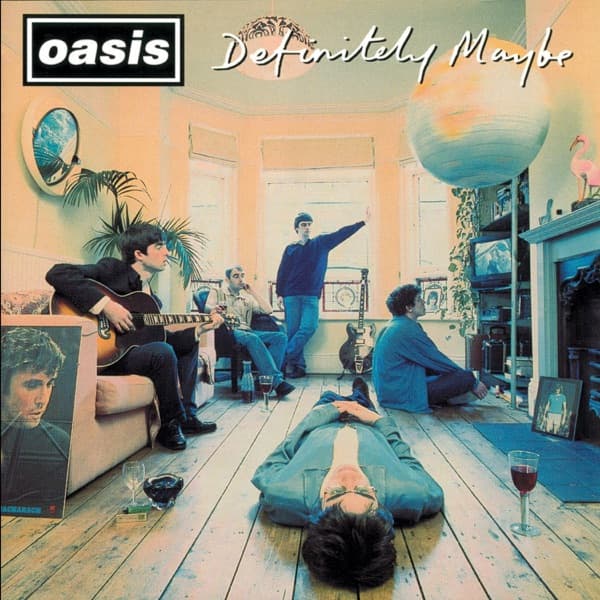

Brian Cannon spent three days arranging and rearranging every single object in Paul 'Bonehead' Arthurs' living room, creating what would become one of Britpop's most iconic album covers. The Definitely Maybe sleeve wasn't shot in some fancy studio—it was photographed in the guitarist's actual home in Didsbury, Manchester, with Cannon obsessing over every detail from the angle of the champagne bottle to the placement of magazine clippings.
Liam Gallagher wanted the cover to reflect the band's aspirations rather than their gritty reality. While Oasis were still largely unknown and far from wealthy, Cannon created a fantasy of rock star excess using carefully chosen props that suggested success, luxury, and the high life the band craved.
Every object tells a story of ambition. Cannon placed a bottle of champagne, a globe, stacks of vinyl records, and photographs of the band members throughout the cluttered room. The TV shows a grainy image, there are flowers in a vase, and musical equipment scattered around—creating a lived-in but aspirational domestic space.
Michael Spencer Jones shot the cover using available light streaming through the windows, giving the image its warm, golden quality. The photography session lasted several hours as Cannon continued tweaking the arrangement, moving objects millimeters at a time to achieve the perfect composition.
Brian Cannon, who ran Microdot design agency, had already worked with several Manchester bands and understood the importance of creating mythology through imagery. His attention to detail was legendary—he would later admit to spending more time arranging the props than the actual photography took.
The band initially wasn't sure about using such a domestic, unglamorous setting for their debut album cover. Rock albums typically featured the band members prominently, but Cannon convinced them that the room itself could tell their story more powerfully than any traditional band photograph.
When Creation Records saw the final image, they immediately recognized its power. The cover perfectly captured the band's swagger and ambition while maintaining an accessibility that felt authentically working-class British. It suggested rock star lifestyle without the pretension.
Critics and fans embraced the cover as quintessentially British in its ordinariness-made-extraordinary. Unlike the polished, high-concept album covers dominating the American market, Definitely Maybe felt like you could walk into that room and belong there.
The cover's influence on Britpop artwork was immediate and lasting. Bands like Blur, Pulp, and Radiohead began incorporating more domestic, everyday imagery into their album designs, moving away from the aggressive aesthetics that had dominated alternative rock.
Cannon would continue working with Oasis on subsequent releases, but Definitely Maybe remained his masterpiece. The cover has been referenced and parodied countless times, cementing its place in the visual vocabulary of 1990s British culture.
In 2019, Bonehead revealed that he still lived in the same house, and fans regularly made pilgrimages to see the famous living room. The furniture had changed over the years, but the room's basic layout remained remarkably similar to that captured in Spencer Jones' photograph twenty-five years earlier.