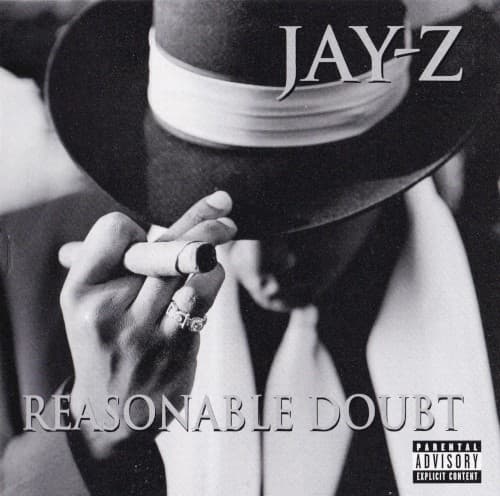
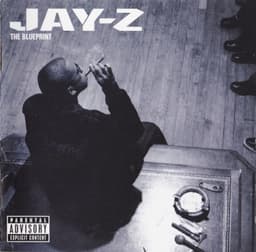
Before Reasonable Doubt had its final title, Jonathan Mannion was developing cover ideas for a record called Heir to the Throne. Mannion later said Jay-Z changed the name because he wanted listeners to discover the music and decide for themselves whether he was the heir apparent. The title changed, but the visual language Mannion had been researching — authority, old New York style and an underworld sense of self-possession — remained useful.
Mannion's references came from roughly the 1910s through the late 1910s and from the sharply dressed mob figures of New York. He has described the goal as something distinctly Brooklyn and New York rather than the brighter Miami-mafia imagery common in rap at the time. The parallel mattered: Roc-A-Fella was building an independent business on its own terms, and Mannion saw a useful visual rhyme in underworld figures who were impeccably dressed while operating outside normal structures.
Art director Adrien Vargas helped translate that direction into the complete package. Vargas recalled that the team deliberately chose black and white partly because record-store racks were full of vivid color; a monochrome sleeve would separate itself immediately. He and Mannion also discussed classic cars, piles of cash and other gangster-era cues, but the final cover distilled the idea into a portrait rather than a crowded scene.
The shoot took place around Mannion's West 72nd Street apartment building in Manhattan. Jay-Z arrived with Damon Dash and Kareem 'Biggs' Burke, and the group used the rooftop and nearby locations. Mannion was early in his career — this was his first album cover — but he did not shoot a single lucky frame. He later estimated roughly thirty rolls of film from the session. Vargas said the team had many strong images to choose from; Mannion remembered everyone recognizing that the eventual cover frame was the strongest.
The chosen portrait is more guarded than the old description suggested. Jay-Z wears a light suit and a broad hat that pushes his eyes into shadow, with a cigar completing the period-coded look. The image does not depend on direct eye contact or an exposed facial expression. It withholds. That concealment is part of the authority: the subject is visible enough to establish presence but not open enough to become familiar.
That is why the mob-boss reference matters more than generic claims that the photograph simply proved 'simplicity' could work. Mannion and Vargas were not trying to make an empty neutral portrait. They were constructing a character — timeless, tailored, Brooklyn-rooted, businesslike and difficult to read — for an artist whose debut was explicitly asking the audience to judge his claim to power.