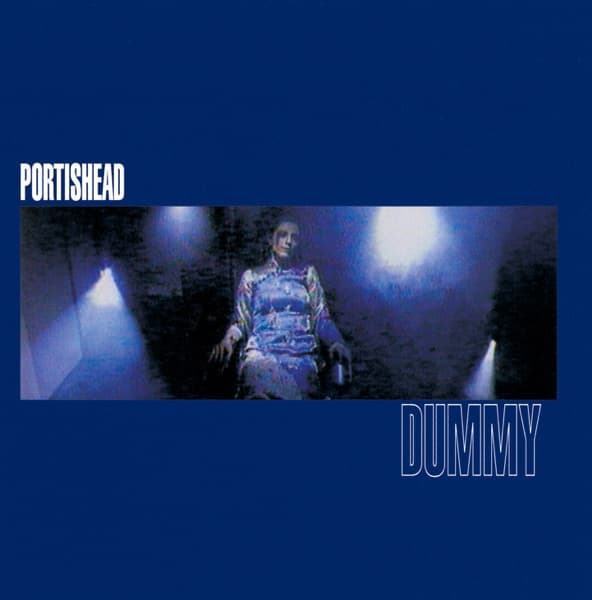
Dummy looks like somebody paused a film at exactly the wrong moment. Beth Gibbons is caught in blue, soft and slightly blurred, in an image that feels less like a record-company portrait than evidence from a scene that started before you arrived. That is because it is.
The woman on Portishead's 1994 debut is Gibbons, not an anonymous model. The image comes from To Kill a Dead Man, the short noir/thriller film Portishead made during the group's early period. The Ringer's retrospective on Glory Box identifies the cover directly as a blurry blue photograph of Gibbons taken from that film and describes the source scene: Gibbons sits in a dress with blood on her face and an IV beside her.
That provenance changes how the sleeve should be read. BTC previously built a separate fashion shoot around the image, describing an unnamed model, vintage styling, 1960s Vogue references and a purpose-built glamour portrait. Those claims should not survive. The cover already has a documented production history: it began as moving image.
Once the film frame is isolated and pushed into the album's cold blue palette, its narrative becomes ambiguous. We do not see what happened immediately before the image or what lies outside the crop. That incompleteness is the source of much of its tension. Portishead did not merely borrow noir as a mood-board adjective; the band made a noir-inflected short film and allowed a fragment of that film to become the face of Dummy.
The safest credit model separates the source work from formal album-package roles. Published film records identify Alexander Hemming as director and cinematographer of To Kill a Dead Man, but that should not automatically be converted into a formal album-cover photographer credit unless release-level sleeve evidence confirms it.