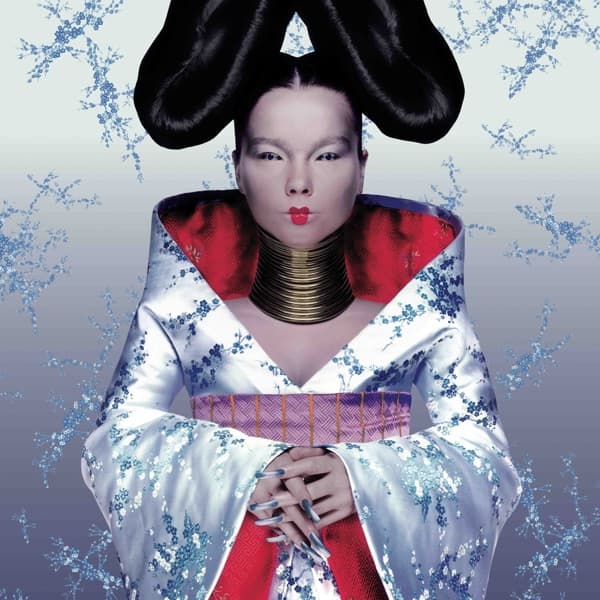


The cover for Homogenic required over 200 individual photographs to create what appears to be a single, seamless portrait. Warren du Preez and Nick Thornton Jones spent months digitally stitching together multiple shots of Björk's face and an elaborate sculptural collar to achieve the otherworldly final image.
The concept emerged from Björk's vision of creating something that looked both ancient and futuristic. She wanted to reference Elizabethan portraiture while suggesting an alien or cyborgian aesthetic that would match the album's fusion of electronic beats and orchestral arrangements.
Me Company, the London-based design collective, art directed the ambitious shoot. The duo of du Preez and Thornton Jones were relatively unknown photographers at the time, but their background in digital manipulation made them perfect for Björk's complex vision.
The sculptural ruff collar was created separately from the portrait session. Multiple photographs captured different angles and lighting conditions of both Björk's face and the collar structure, which was designed to evoke both historical fashion and organic, almost insectoid forms.
The digital compositing process was revolutionary for 1997. Before Photoshop became ubiquitous, du Preez and Thornton Jones used early digital tools to seamlessly blend the elements. They carefully matched lighting, shadow, and texture across dozens of source images.
The photographers' meticulous approach meant that Björk's skin appears porcelain-smooth while maintaining subtle human details. Every highlight and shadow was individually crafted to create the impression of a single, perfectly lit photograph that could never actually exist.
When One Little Indian Records first saw the image, they were initially uncertain about its commercial appeal. The cover looked unlike anything in record stores at the time, more resembling a museum art piece than a pop album cover.
Critics immediately recognized the cover's artistic ambition. It appeared on numerous "best album covers" lists and helped establish Björk as a visual artist in addition to a musical innovator. The image perfectly captured the album's blend of organic and synthetic elements.
The cover's influence on electronic music artwork was immediate and lasting. Artists began experimenting with similar digital manipulation techniques, and the fusion of historical and futuristic elements became a recurring theme in alternative music packaging.
Me Company went on to work with major fashion brands and other musicians, but their Homogenic cover remained their most iconic work. The image helped define the visual language of late-1990s electronic music.
The cover established du Preez and Thornton Jones as major fashion photographers. They later shot campaigns for brands like Dior and appeared in Vogue, but always credited their Björk collaboration as their breakthrough moment.
The original high-resolution files for the cover required enormous storage space by 1997 standards. The photographers had to use multiple hard drives and backup systems to preserve the hundreds of layer files that comprised the final composite image.