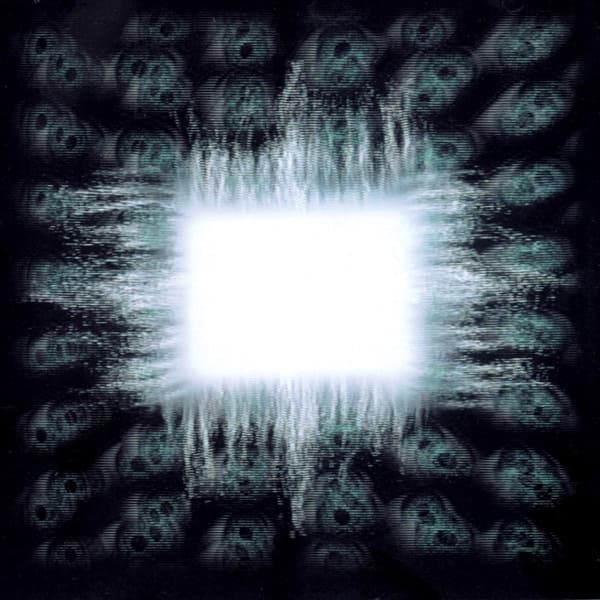
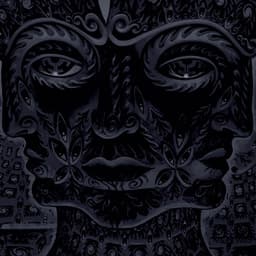

Tool's Ænima cover emerged from guitarist Adam Jones' twisted imagination and his professional background creating special effects for films like *A Nightmare on Elm Street 3* and *Jurassic Park*. Jones spent months crafting the nightmarish imagery using stop-motion animation techniques he'd learned working alongside Hollywood's top effects artists.
The concept originated from Jones' fascination with anatomical imagery and Carl Jung's theories about the collective unconscious. He wanted to create something that looked like it belonged in a medical textbook written by someone losing their sanity. The ribcage structure that dominates the cover represents humanity opening itself up to reveal the dark truths within.
Jones built the entire cover art using practical effects and miniatures in his home studio. He constructed detailed anatomical models from latex and foam, then photographed them using the same lighting techniques he'd mastered during his film work. The process took over six months, with Jones obsessing over every detail of the grotesque tableaux.
The cover's creation involved no digital manipulation — everything was achieved through old-school special effects wizardry. Jones used forced perspective, elaborate lighting setups, and carefully constructed miniature sets to achieve the unsettling three-dimensional quality. He shot dozens of variations before settling on the final composition.
Maynard James Keenan and the rest of Tool were initially shocked by Jones' creation, unsure if it was too extreme for commercial release. The band's management worried that major retailers would refuse to stock such disturbing imagery. Some early focus groups described the cover as "deeply unsettling" and "the stuff of nightmares."
Zoo Entertainment executives nearly demanded a different cover design, fearing the artwork would limit the album's commercial potential. Jones fought passionately for his vision, arguing that Tool's music demanded artwork that challenged listeners visually as much as sonically. The band ultimately supported their guitarist's artistic vision despite industry pressure.
The cover became legendary among metal fans for its uncompromising artistic vision and technical craftsmanship. It inspired countless imitators in the metal world, though few achieved Jones' level of disturbing beauty. The artwork perfectly captured the album's themes of spiritual transformation through confronting uncomfortable truths.
Jones' background in film effects elevated Tool's visual identity far beyond typical metal album artwork. His approach influenced an entire generation of musicians to think cinematically about their album covers. The Ænima cover became a masterclass in how band members with specialized skills could revolutionize their group's visual presentation.
Critics praised the cover as one of the most sophisticated pieces of album artwork in metal history. It demonstrated that heavy music could support genuinely artistic visual concepts without compromising its intensity. The artwork's success helped establish Tool as thinking person's metal, attracting art school students alongside traditional metalheads.
The cover's influence extended beyond music into contemporary art circles, with several gallery exhibitions featuring Jones' album artwork alongside established fine artists. His techniques inspired special effects artists working in horror films throughout the late 1990s and early 2000s. The Ænima cover proved that album artwork could function as legitimate contemporary art.
Jones later revealed that he hid several occult symbols throughout the cover art that only become visible under certain lighting conditions — details so subtle that fans are still discovering them decades later.