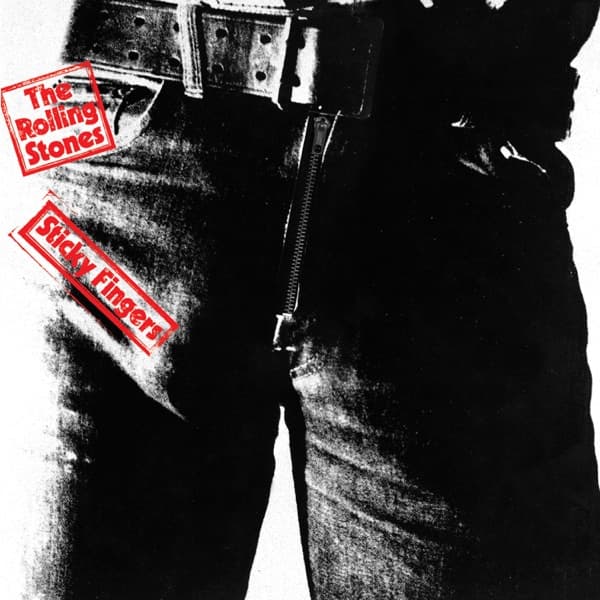
The composition is deliberately confrontational. The bulge in the jeans occupies the center of the frame, unavoidable and unapologetic. The shot is cropped tightly at waist and mid-thigh, eliminating face, hands, and any identifying feature above the belt line, reducing the human body to an anonymous erogenous zone. There is no person here to meet the eye, only a region of one, and the crop forces attention exactly where a viewer might otherwise politely look away.
The lighting is flat and direct, the illumination of a fashion photograph or a department store catalog, and that ordinariness is part of the provocation: the most charged part of the body is presented with the neutral clarity of merchandise. The denim's texture is rendered with enough detail to feel tactile, the creases and shadows describing the body underneath with a precision that hovers between documentary and pornographic.
The brass zipper adds a third dimension that most sleeves lack. It is not depicted but present, and it invites touch, converting a picture into an object and a viewer into a participant. Pulling it down produces a visual reveal, the transition from blue denim to white cotton, that is both anticlimactic and suggestive: the printed briefs beneath are far less provocative than the promise the zipper implied. The come-on and the letdown are built into the same gesture.
Colour is held to a narrow range, the blue-grey of denim, the warm brass of the zipper, and the shadows in the folds, an image that reads as nearly monochromatic yet stays rich in tonal variation. That restraint focuses attention on texture and form rather than colour, forcing engagement with the image's content rather than any surface prettiness.
The front carries no text at all, only the image and the zipper. The band name and title appear in a face made to look as though the letters had been cut from sticky tape and pressed down, the y in "Sticky" dripping downward in a visual pun that points at both adhesive and bodily fluids. Positioned so it reads on the inner sleeve visible through the unzipped opening, the lettering makes the wordplay a further reward for handling the object.
Every choice pushes in the same direction. The tight crop strips identity; the catalog lighting strips romance; the limited palette strips distraction; the working zipper adds participation; and the modest briefs beneath deflate the tease at the exact instant of its fulfilment. The whole image works as a small machine of desire and disappointment, staging arousal only to reveal how banal the payoff can be, and it lands because the packaging makes the viewer act it out rather than merely observe it.